Why Pride Still Matters in 2026
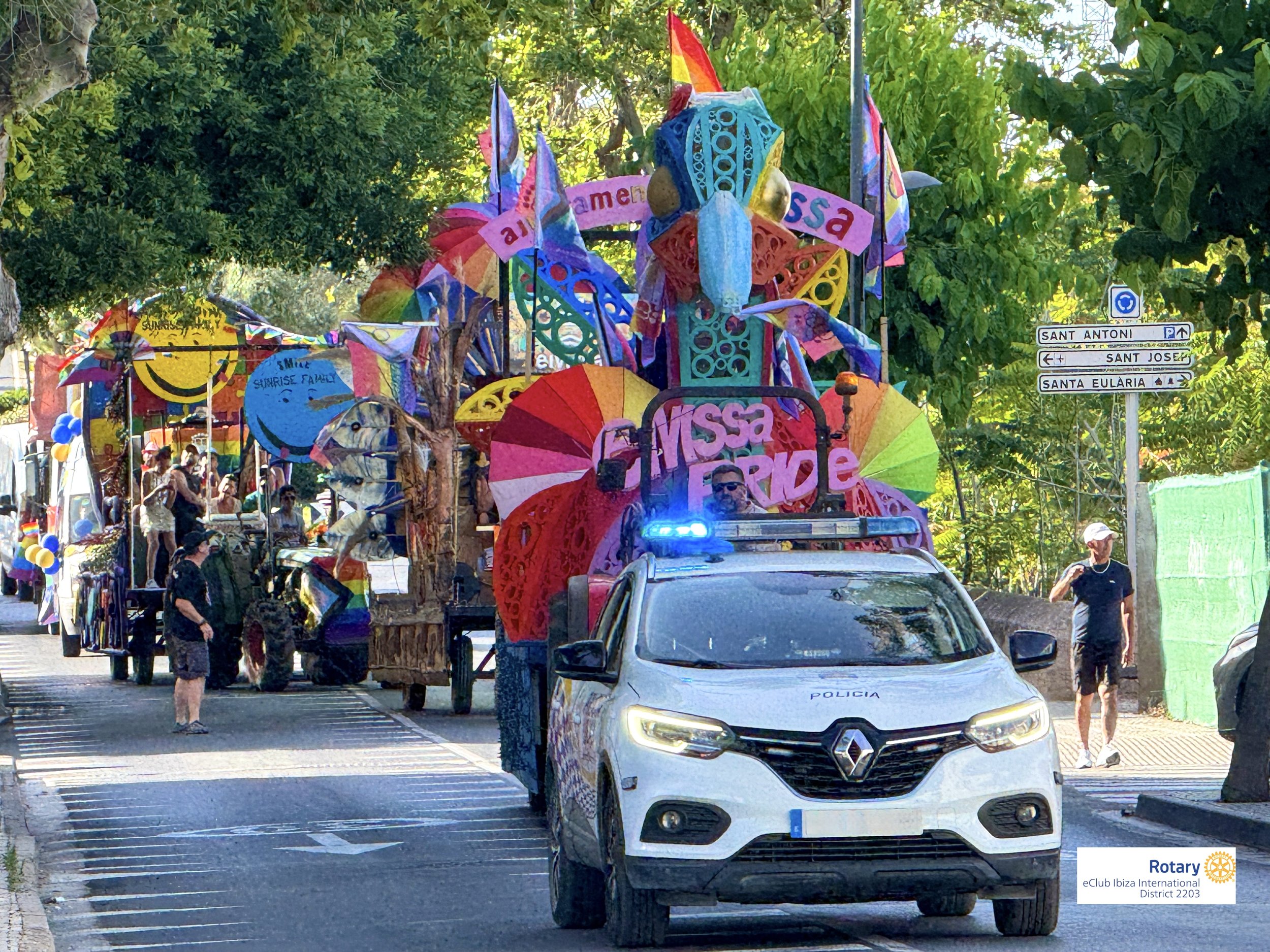
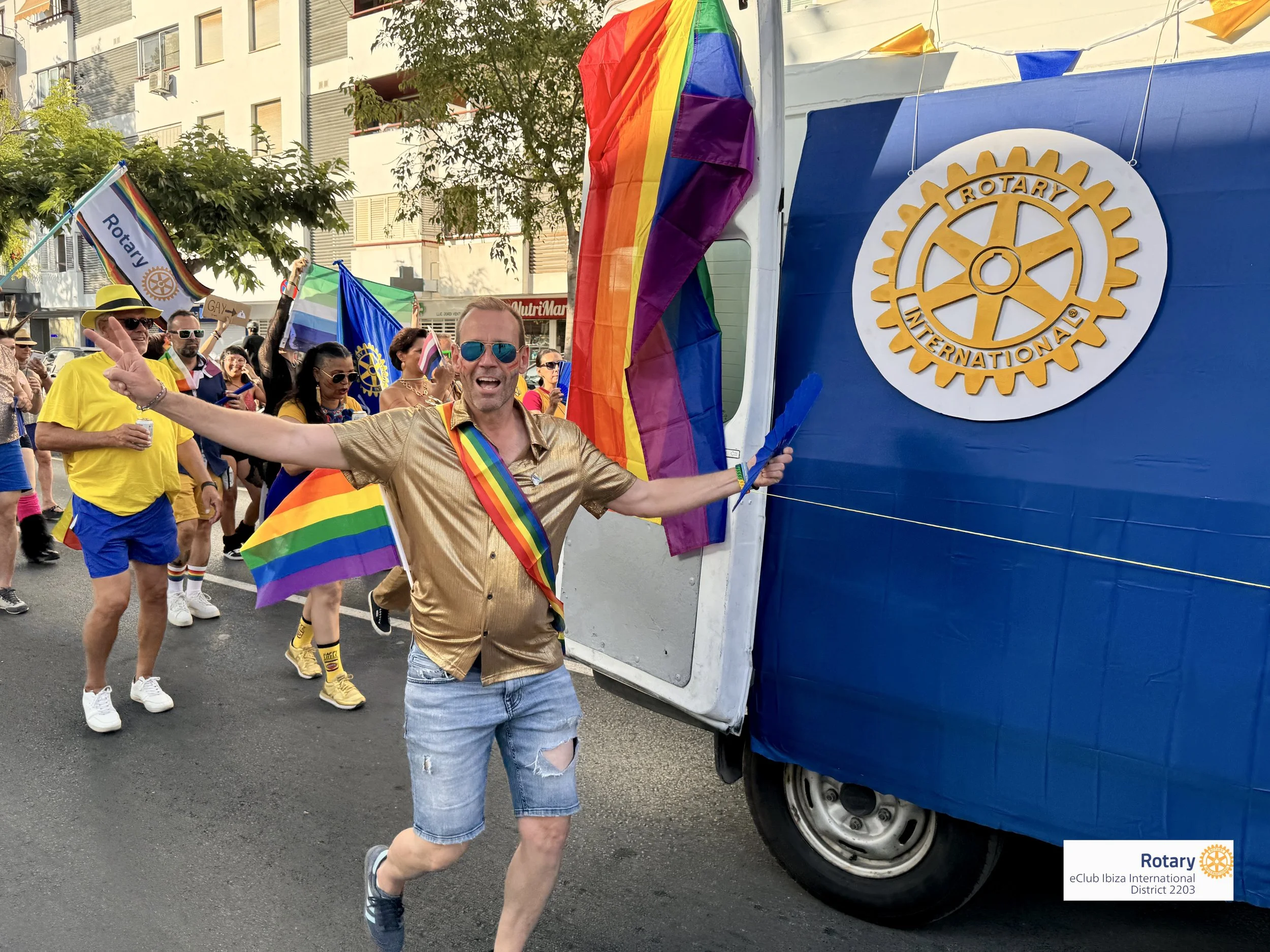
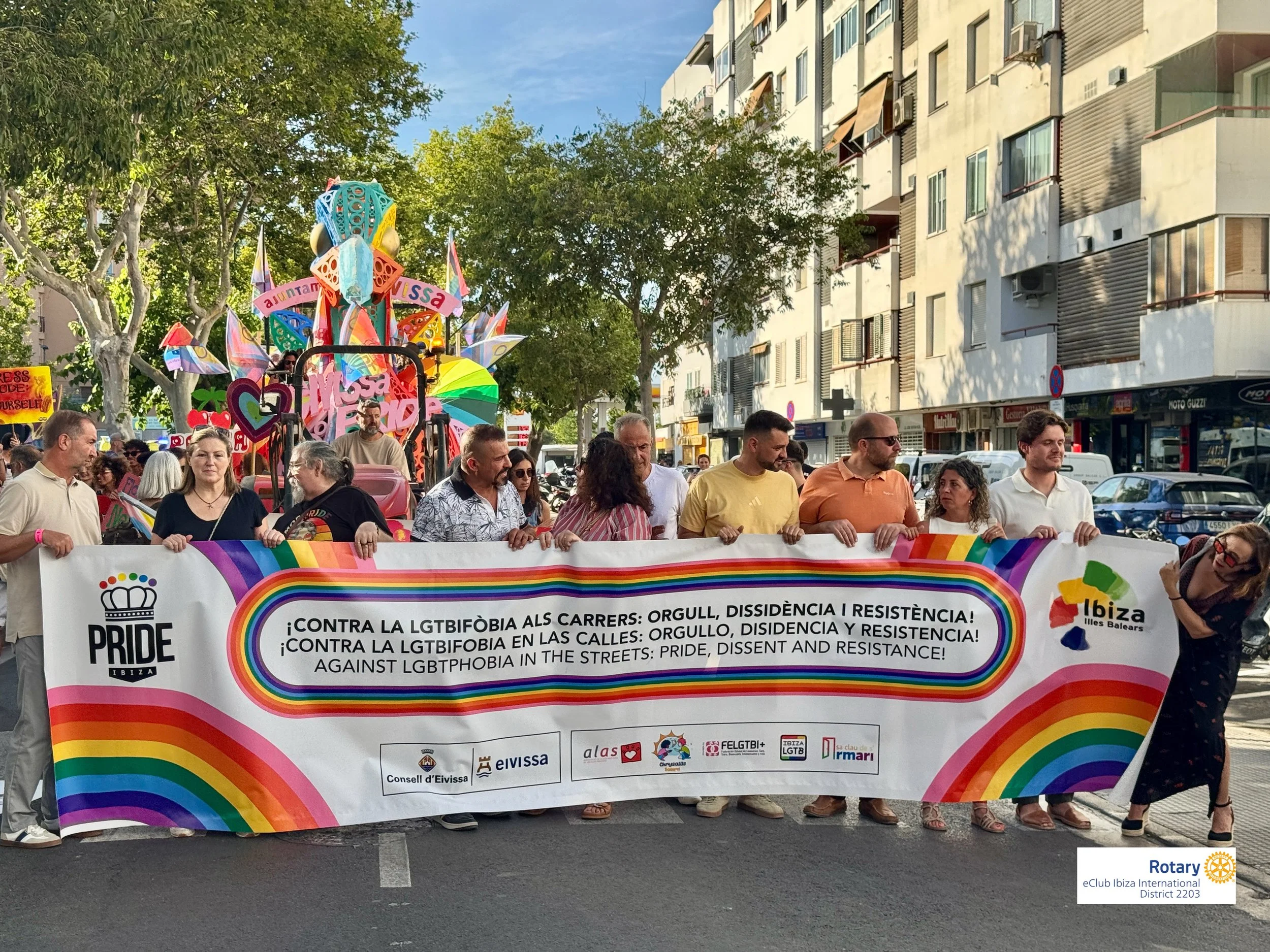
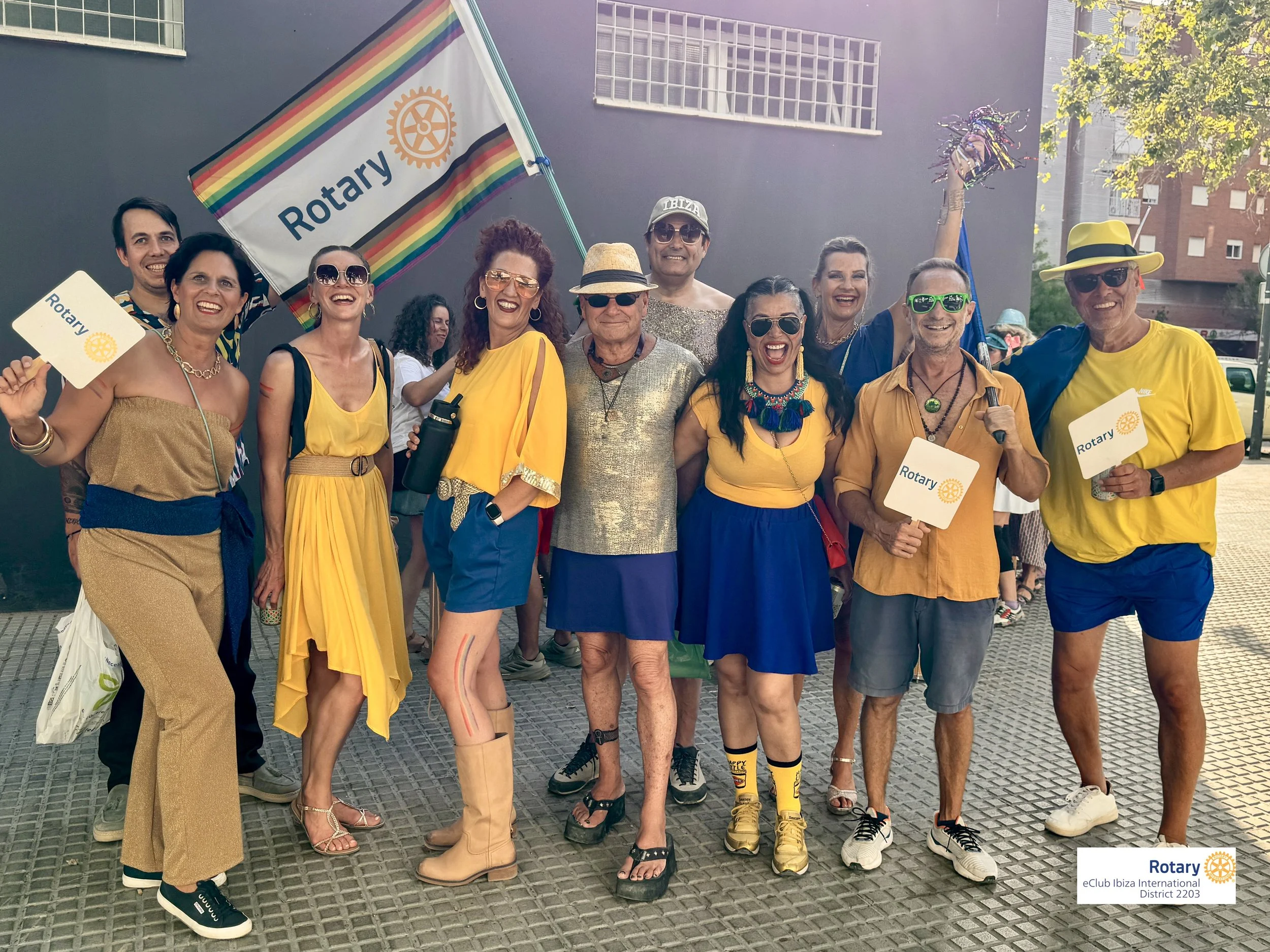
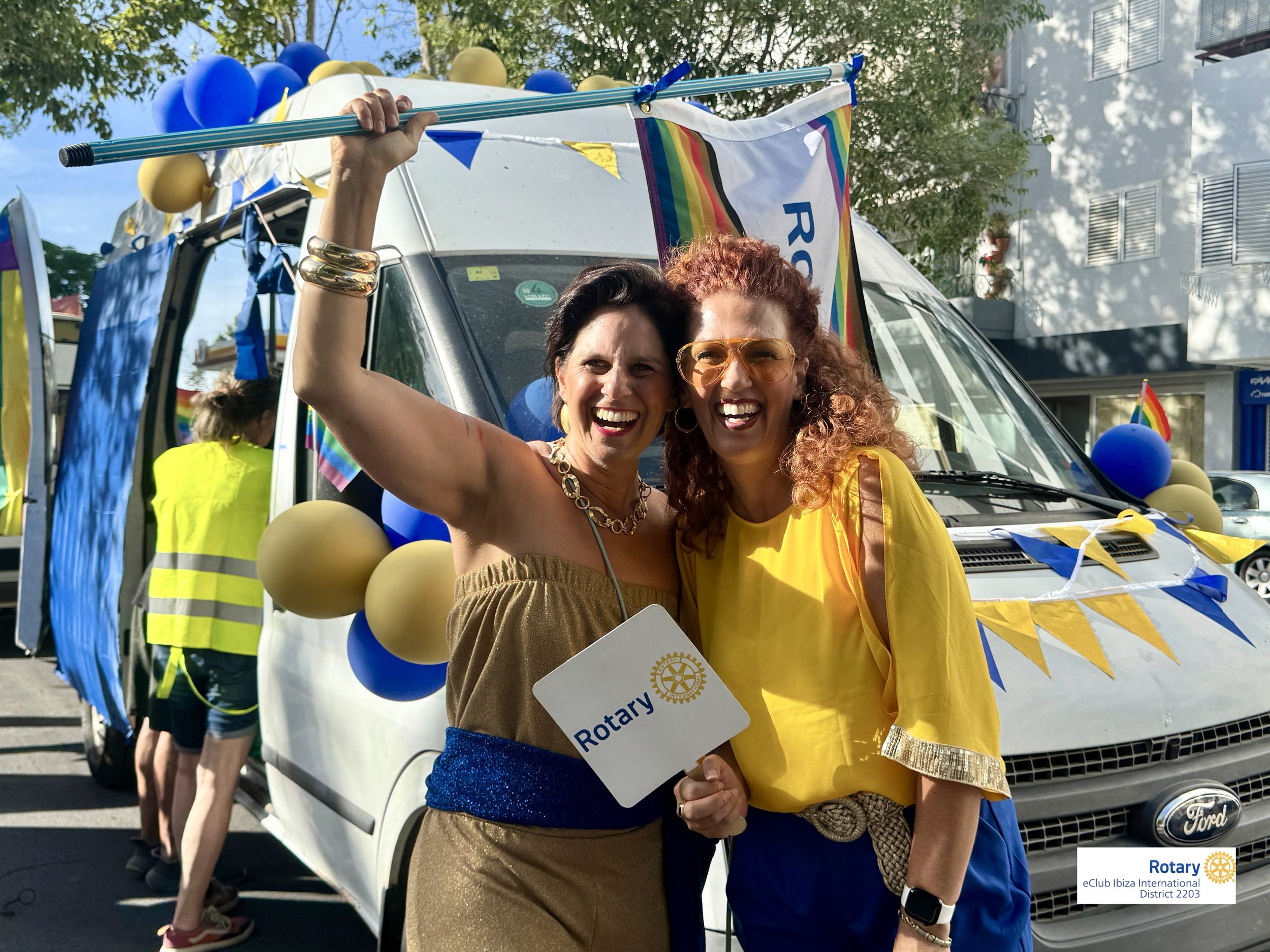
On Saturday 13 June 2026, members of Rotary eClub Ibiza International took part in the Pride Ibiza parade, joining residents, community groups, visitors and supporters in Ibiza Town.
We have it on good authority that this made ReCII the first Rotary club in Spain to take part officially in a Pride parade. We would be glad to be corrected. But if it is true, we can only encourage other clubs to get involved in their own local Pride events, not least because it was tremendous fun, and because the day turned out to be about rather more than fun.
For ReCII, the reason for being there was straightforward. Rotary is a service organisation built on fellowship, and Pride is one of the few days in the year when a large part of Ibiza's community gathers in public, openly, around something that still carries real weight for many of them. That seemed worth showing up for. It also seemed worth taking seriously, because one question still comes up more often than it should: why do gay people still need Pride?
It gets asked in all sorts of ways. Sometimes clumsily, sometimes in good faith. Often by people who live secure, accepted lives and have never had to think hard about what visibility costs when your identity is the thing being judged. And sometimes it is asked simply because, from the outside, Pride looks like a party. Music, flags, dancing, costumes, cameras, laughter. All of it real, and Ibiza Pride is joyful, as it should be. The party came later, though. What came first was a refusal to stay hidden.
Pride began because visibility was once dangerous
The modern Pride movement is usually traced to the Stonewall Uprising in New York, which began in the early hours of 28 June 1969 after police raided the Stonewall Inn, a bar where LGBTQ+ people gathered at a time when their lives were heavily policed. It was not the first act of resistance. There had been earlier organisations and protests, and people who took public risks long before. Stonewall was the one that caught. A year later, in June 1970, the first Christopher Street Liberation Day marches took place in New York, Los Angeles, Chicago and San Francisco.
Those first marches were civil rights demonstrations. People marched when doing so could cost them a job, a family, their safety or worse, and the point was to refuse the demand that gay, lesbian, bisexual and transgender people stay out of sight. Pride still carries that. The flags and the music came afterwards, and grew around the purpose rather than replacing it.
Pride holds more than one thing at once
Pride resists being reduced to one thing. For some people it is a celebration, a day to be visible without apology, among others who already understand the shape of their lives. For some it is remembrance. The history it carries is not gentle: criminalisation, police raids, forced psychiatric treatment, censorship, the AIDS crisis, and all the lives lost before recognition came. For others Pride is a first public step into a community they have only known in private, or simply a day when they can walk down a street without editing themselves. Plenty of people feel several of these at once.
"But things are better now"
In some places they are, and Spain is one of them. It is now among the strongest countries in Europe for the legal protection of LGBTQ+ people. Same-sex marriage has been legal here since 2005, and many people living on Ibiza today take for granted an openness that would have been unthinkable a generation ago. The progress is real. It is also patchy, and more fragile than comfortable people tend to admit.
Around the world in 2026, consensual same-sex relations remain criminalised in dozens of countries, and in some the death penalty is still legally possible. In many more, LGBTQ+ people face restrictions on how they live in public, on what they can read and be taught, on family life, on healthcare and work and ordinary safety. None of this is ancient history. Even within Europe the picture is mixed. Legal protections vary widely, harassment and hate crime remain serious, and in recent years some governments and regional authorities have set out to restrict LGBTQ+ visibility and events. One country moving forward tells you little about the direction of travel anywhere else, and nothing certain about whether its own gains will hold.
The law and daily life move at different speeds
Law and daily life do not change at the same speed. Someone can live in a country with strong legal protections and still not be safe at home. They can be free to marry and still think twice about holding a partner's hand on the street. They can be supported at work and unwelcome at their parents' table, out in one part of their life and carefully hidden in another.
For young LGBTQ+ people, visibility can be more than symbolic. Seeing adults living openly makes isolation feel less total, and shows them a future wider than the one on offer from a frightened family or a cruel classroom. For older people the day often carries a different weight. Some lived through decades when silence was expected, and lost friends to AIDS while institutions looked away or moved too slowly. And for the migrants, seasonal workers, visitors and refugees who pass through, a Pride march in Ibiza may mean something else again. This is an international island. People here come from every sort of legal and cultural background, including places where being visibly LGBTQ+ in public is impossible, or dangerous.
There is usually someone standing quietly at the edge of a crowd like that, for whom the day is the first time they have been visible in public at all. Pride has a place even where things feel settled. A place can feel safe now and still be full of people for whom arriving here was anything but.
On the "special treatment" objection
The question "why do gay people need Pride?" usually rests on a misunderstanding. Pride answers a long history of being treated unequally. It does not ask for anything extra. There is no call for a "straight Pride" for the simple reason that nobody has been criminalised, pathologised, censored, kept out of marriage, raided in bars, pushed into hiding or denied a family for being heterosexual.
None of which is to say heterosexual people have easy lives, or that LGBTQ+ people have cornered the market on suffering. People suffer in all sorts of ways. Pride is about one particular history and one part of it that has not finished. Visibility became necessary because invisibility was forced on people, and it stays necessary because, for far too many of them, the pressure to disappear has never quite lifted.
Why a Rotary club belongs in that space
Rotary is non-partisan, by design. ReCII does not take party-political positions, and turning up to a civic event is not an endorsement of every organisation, sponsor, slogan or float on the day. But non-partisan does not mean indifferent. Rotary's work depends on fellowship across difference, and on the plain idea that people should be able to take a full part in the life of the place they live. Its membership rules say in so many words that clubs may not bar people on the basis of sexual orientation, and the wider culture asks clubs to be welcoming.
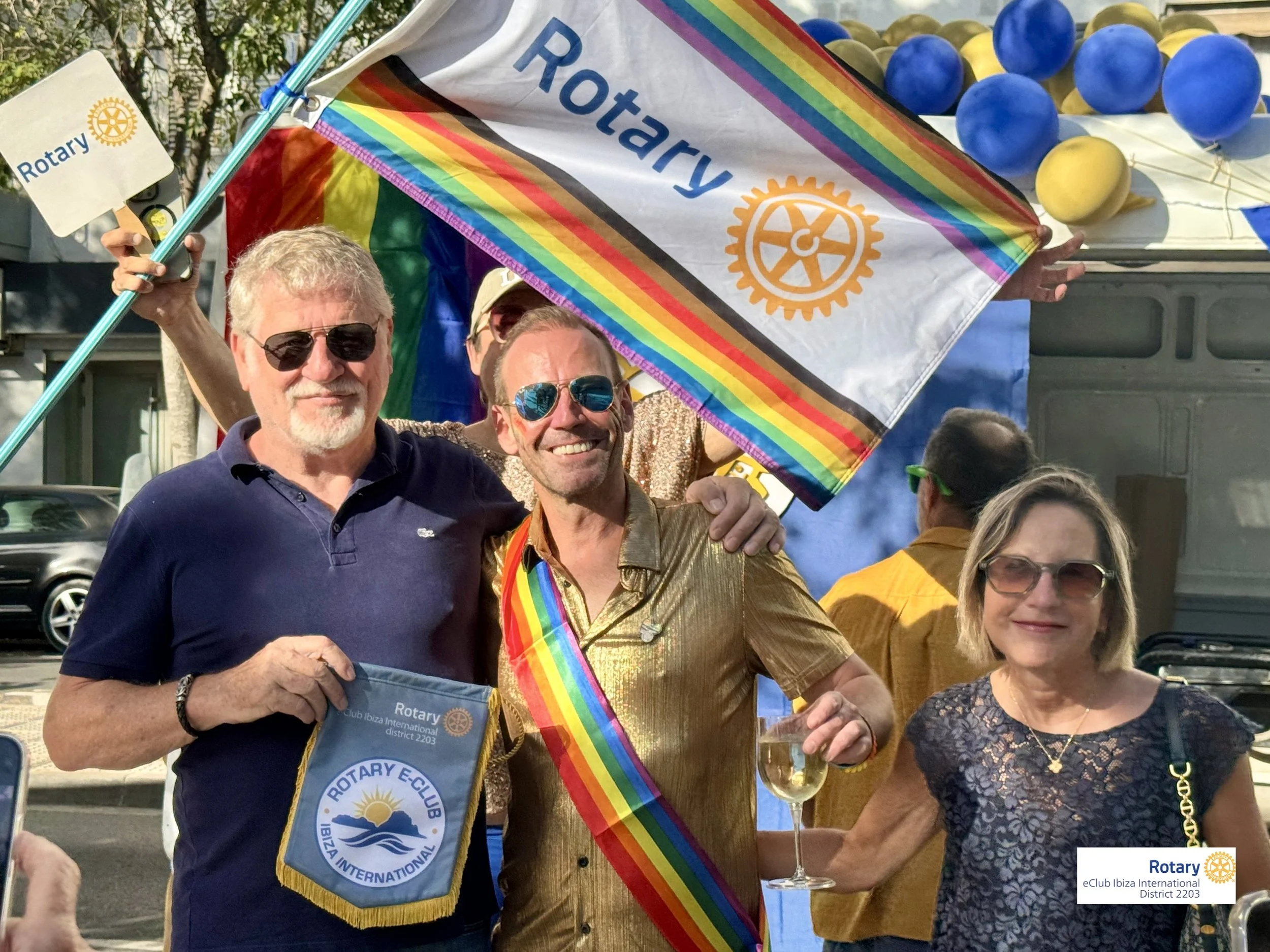
For an English-language international eClub on Ibiza, that has a practical edge. ReCII exists in part because the island's community is international and professionally active, and not always well served by older models of civic life. The eClub format was built to make Rotary reachable for people whose weeks do not fit a traditional in-person meeting. The same instinct runs past the question of meeting formats. A service club ought to be able to see its own community clearly, and Ibiza's includes LGBTQ+ residents, workers, families, business owners, volunteers, artists, retirees and people who have been here for decades. Some are visible and some are not. Some want nothing from us beyond ordinary respect. Others may still be watching to see whether local institutions think they belong here at all.
Turning up at Pride is one quiet way of saying that it does. It takes no grand claim, and no speech from a float. Presence is the whole of it.
Celebration has its own dignity
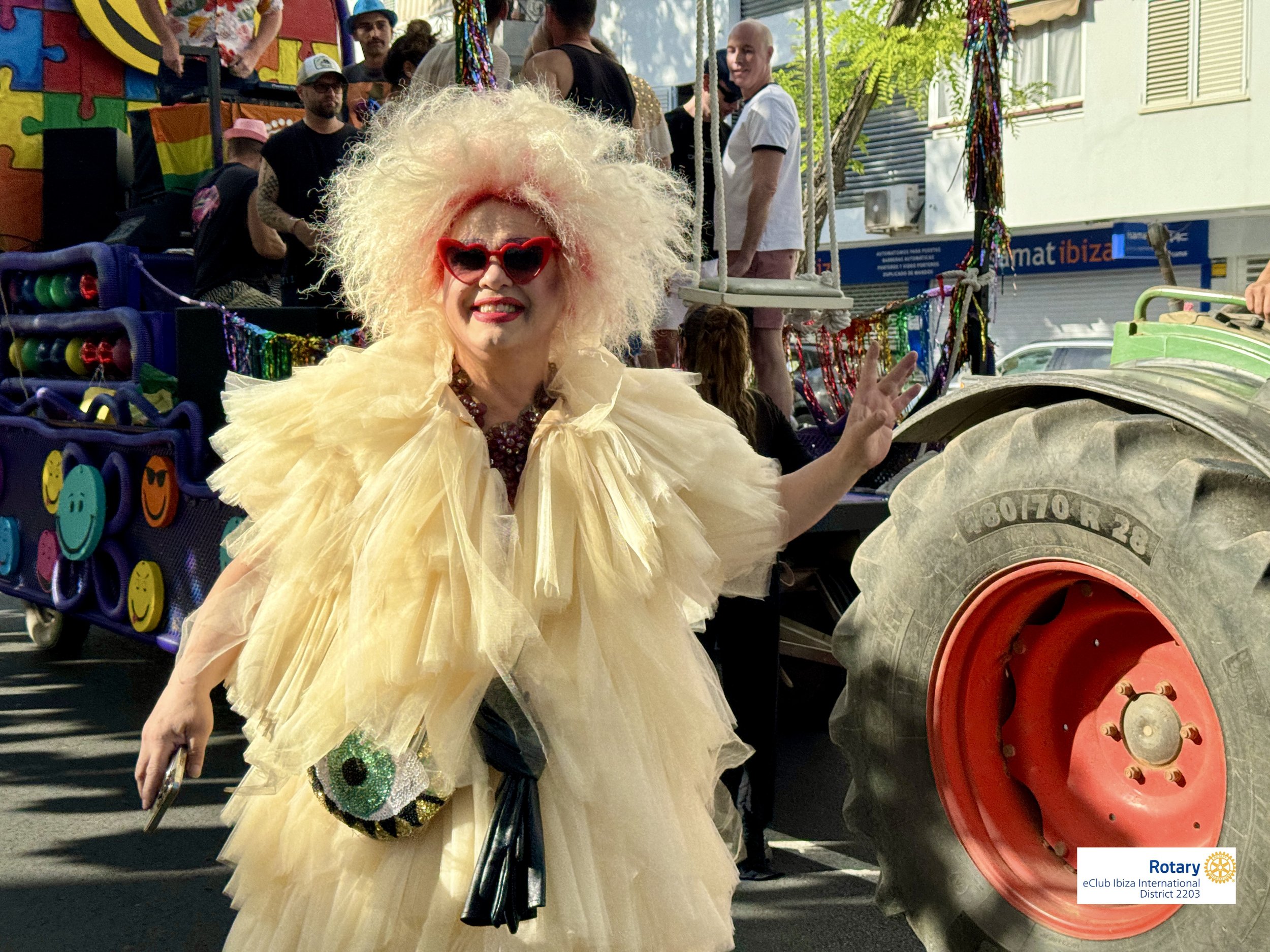
Joy is easy to wave away when it turns up loudly. A celebration can be serious all the same. For people who spent years being told to feel ashamed, standing in the street openly glad of who they are carries real weight. So does dancing where anyone can see, if you grew up afraid of being seen. And for those who remember when a gathering like this could not have happened at all, the colour and the music may mean a great deal more than a passing visitor would guess.
Ibiza, of all places, understands public celebration. The island knows how to gather, and how to turn a procession into something close to chosen family. Pride sits easily in that. It is festive and historical at once, protective for some people and deeply personal for others.
The question worth asking instead
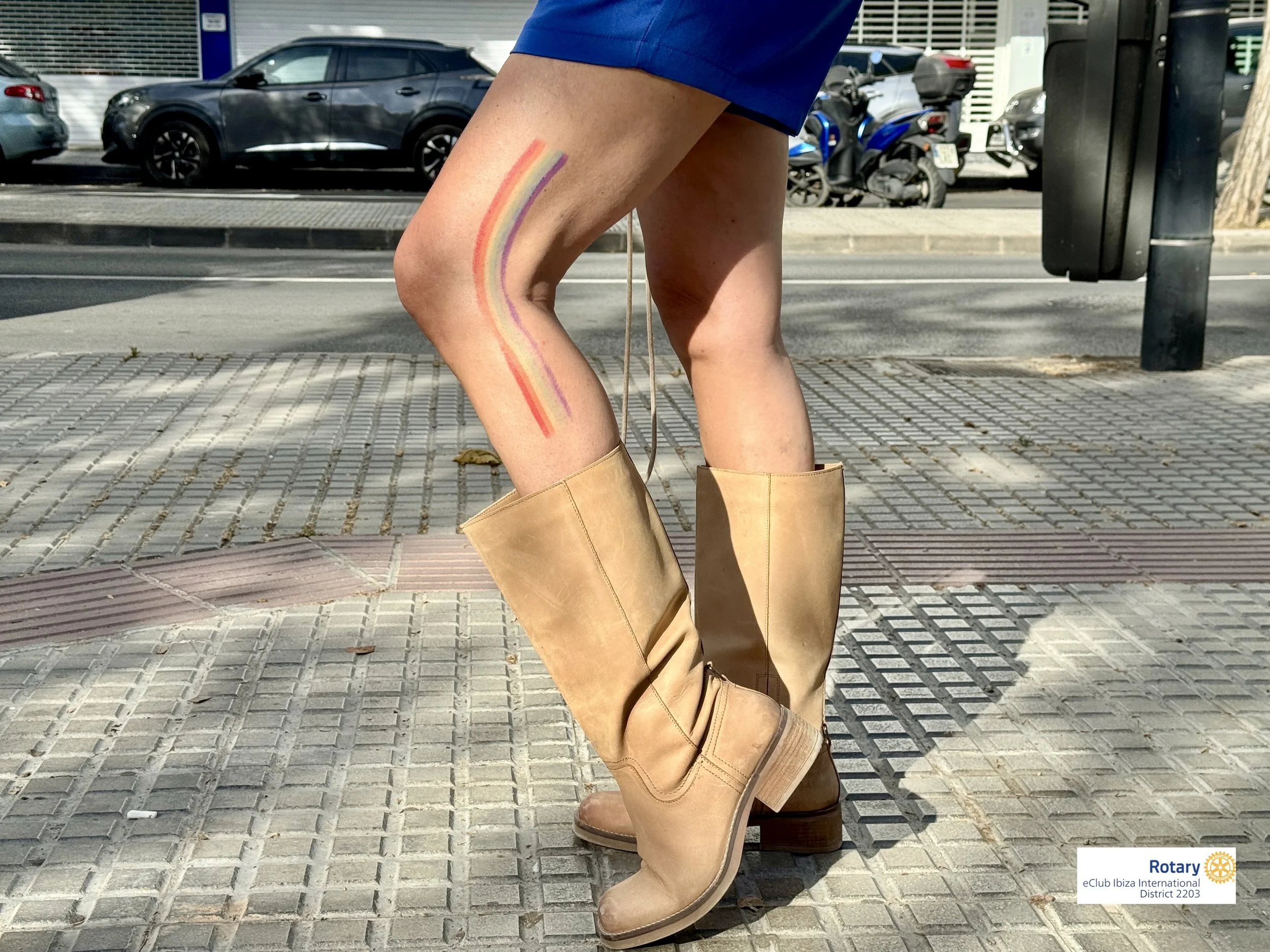
There may be a better question than "why do gay people still need Pride?" Try this one instead: what has kept it necessary for so long? The answer is not hard to reach, though it asks something of whoever is asking. It asks them to look past their own experience, and to take seriously that safety has never been handed out evenly. People do not keep turning out in the street, year after year for half a century, over a question that has been settled.
On 13 June 2026, ReCII took part in Pride Ibiza as one small part of the island's wider community. The club did not need to be the story. The story was already there, in the crowds of people who had come out for the day, each of them for their own reasons. It was a joyful day, and it was never only that. ReCII was glad to be among them.
Image Below:
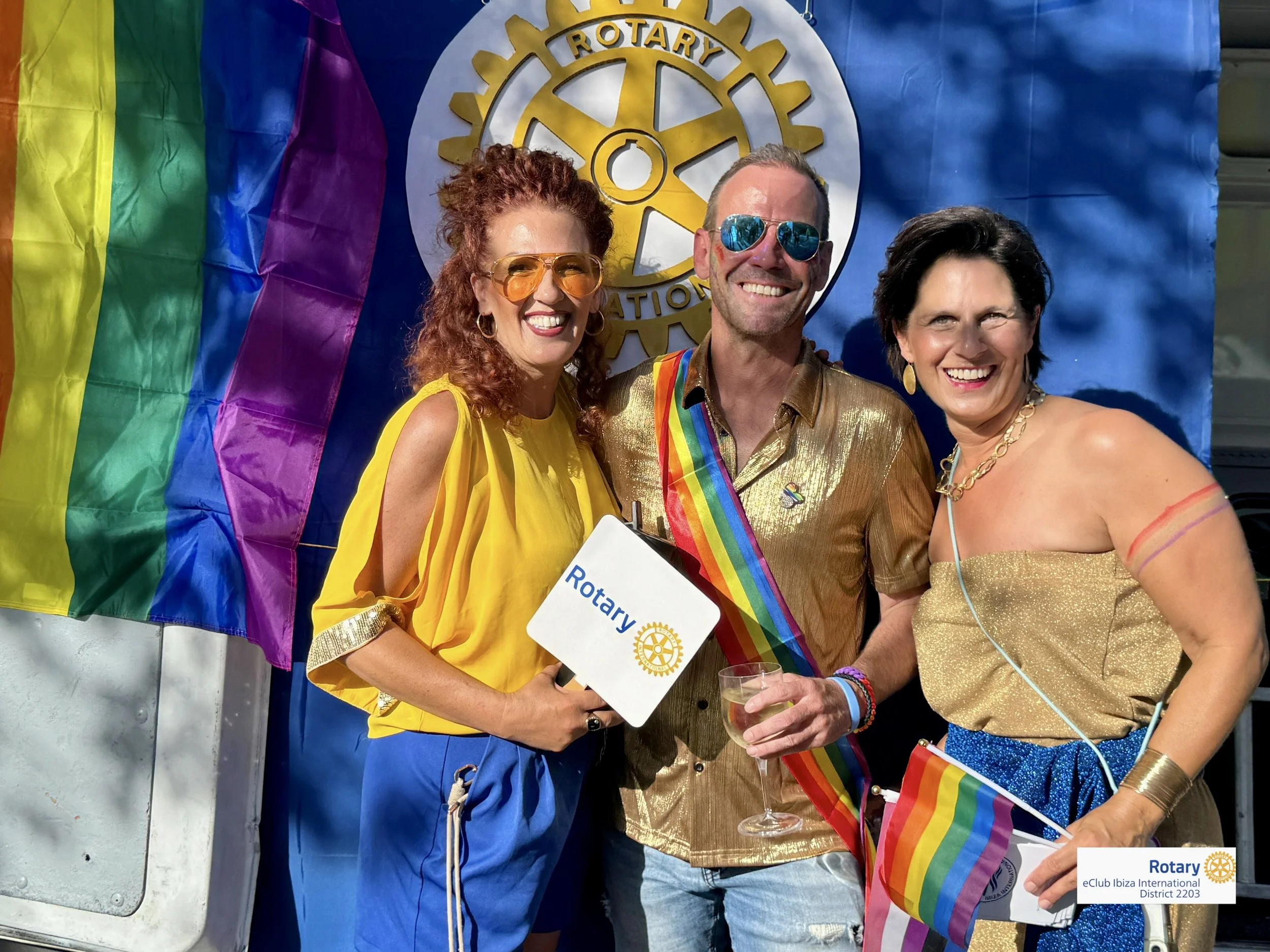
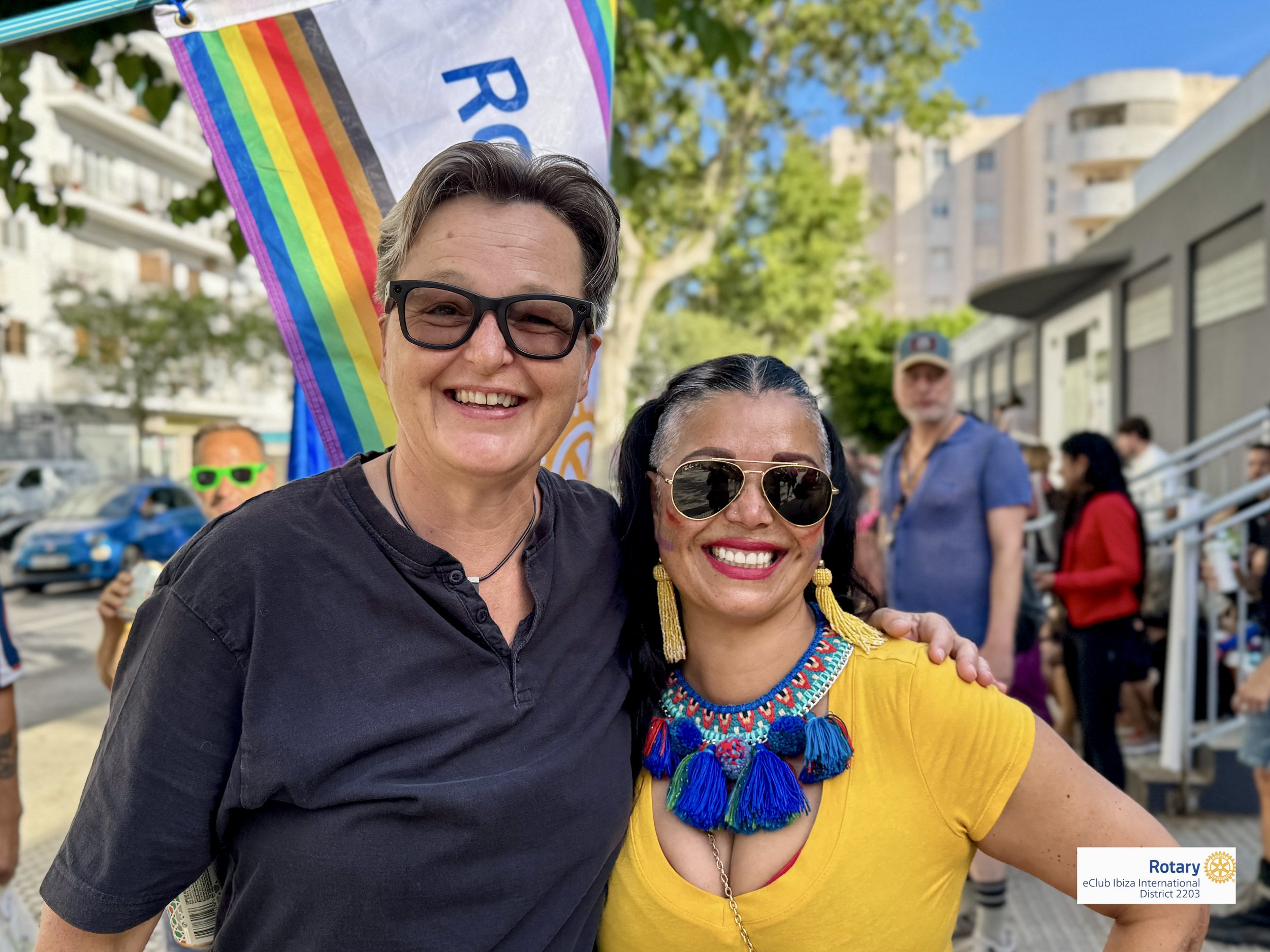
Donna (Pesident-Elect, 2026-27), Ronnie (President 2025-26), Denise (Founding President, 2024-25)