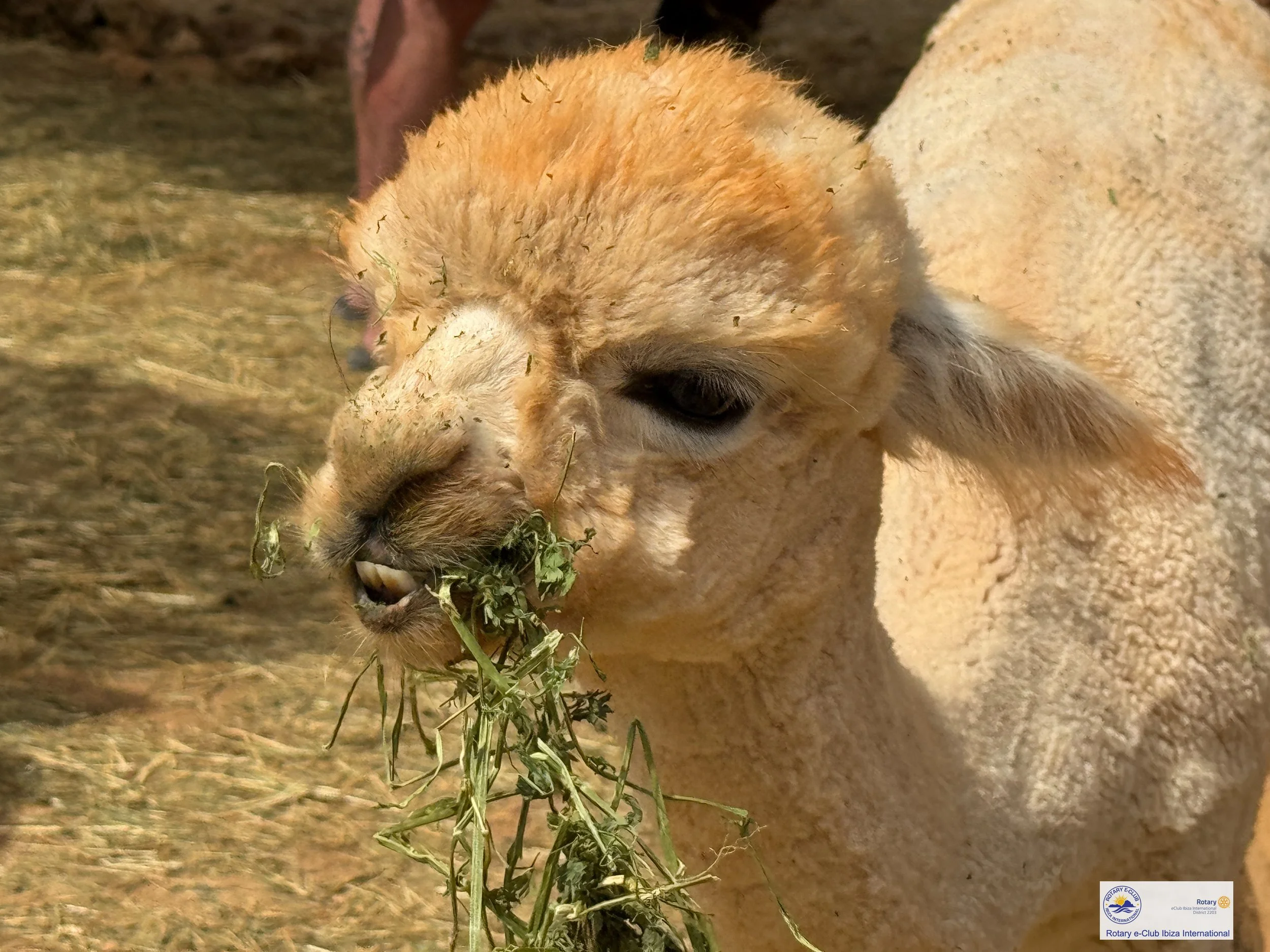
Sunday Morning with Ibiza's Alpacas
One Sunday morning in June, several members of Rotary eClub Ibiza International (ReCII) drove north to visit Es Currals Alpacas Ibiza, the island's first alpaca farm, set on an authentic finca in rural north Ibiza.
The visit followed one of our regular 8pm Monday Zoom meetings. Bart had joined us as a Guest Speaker to tell us about the farm, the alpacas, and the life he and San have built around them.
For ReCII, speaker visits are part of how the eClub stays connected to local life. Most of our meetings happen online, which lets members hear from people and projects across the island without gathering in person every week. Usually the conversation ends there, with a better sense of someone else's work. Now and then it leads to a proper visit.
And once someone has spent an evening talking to you about alpacas, curiosity can only be expected to behave itself for so long…
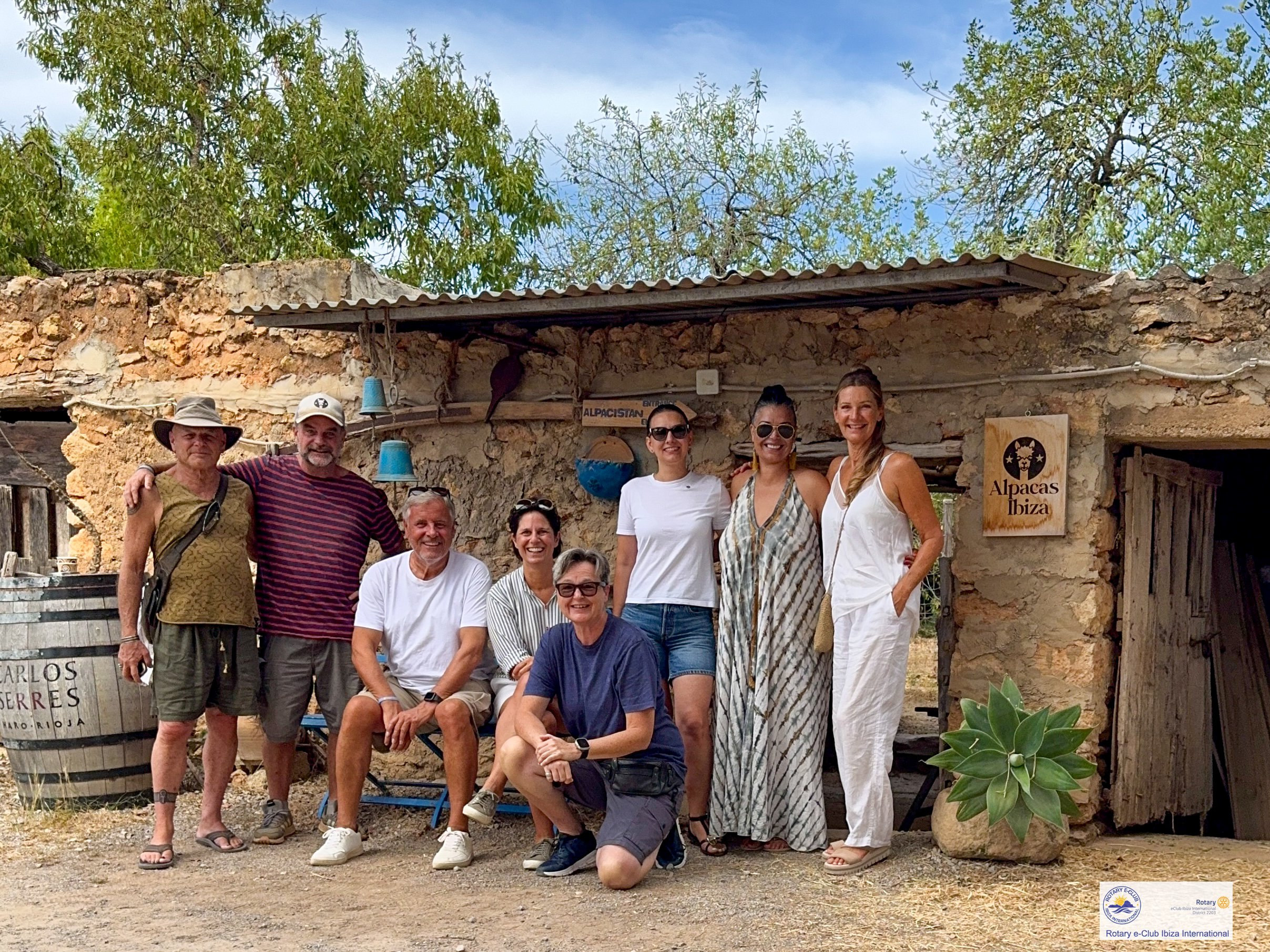
Visiting Es Currals Alpacas Ibiza
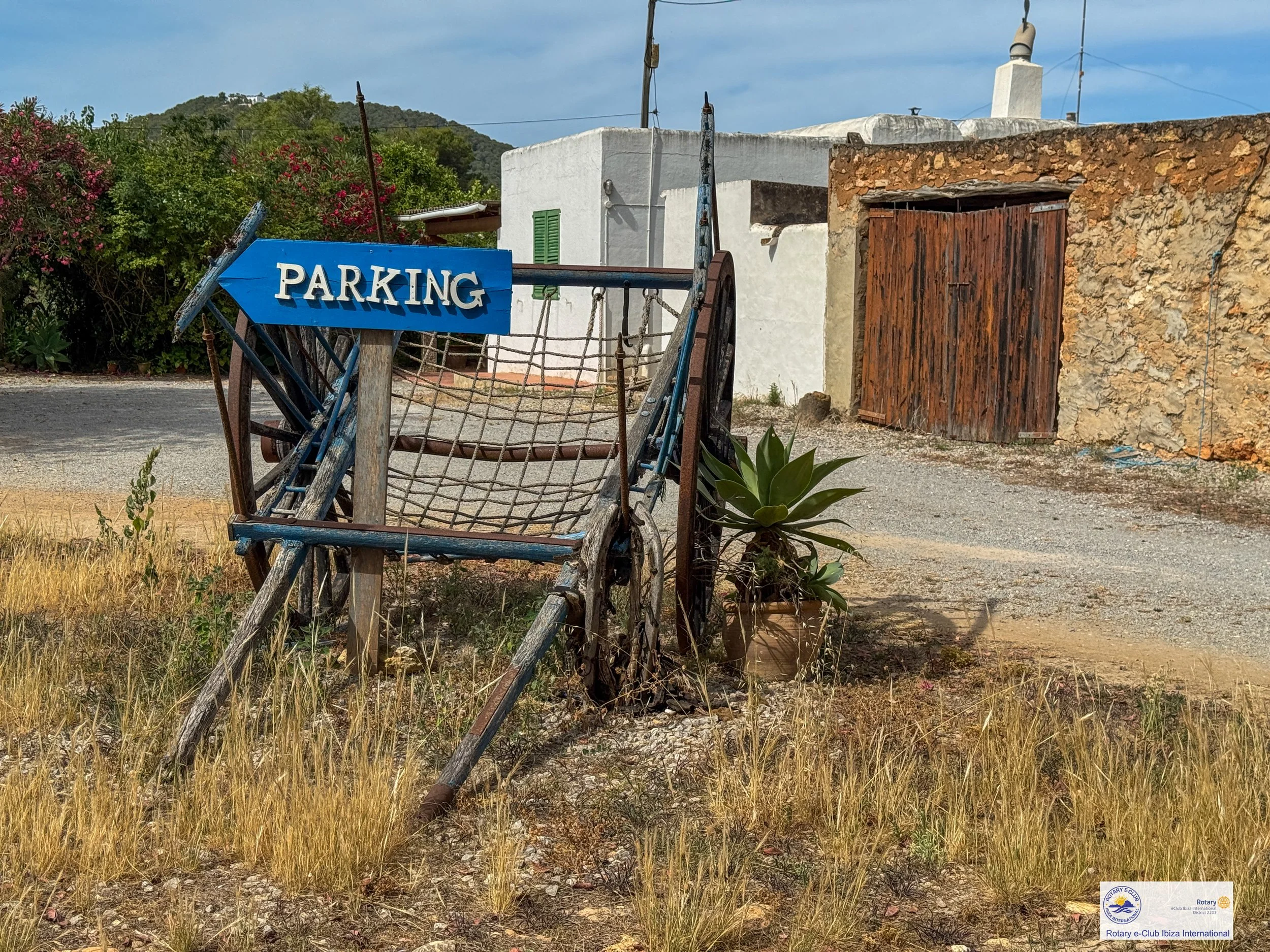
The farm made an immediate impression: old stone walls, a natural setting, rustic and unmistakably Ibiza. Outside, an old horse cart now carries the parking sign.
The day was hot and humid. We arrived under cloud cover, with the full heat not yet upon us, though the stillness in the air meant even modest movement felt like effort. Bart greeted us much as he had on Zoom, unhurried and warm. In person, the care behind the project was as clear to see as it had been on the Zoom presentation (he had rather charmed us all)
Bart currently looks after 22 alpacas, and he clearly regards them as his children. Almost all of them, the very youngest babies aside, know their own names and know when he is speaking to them.
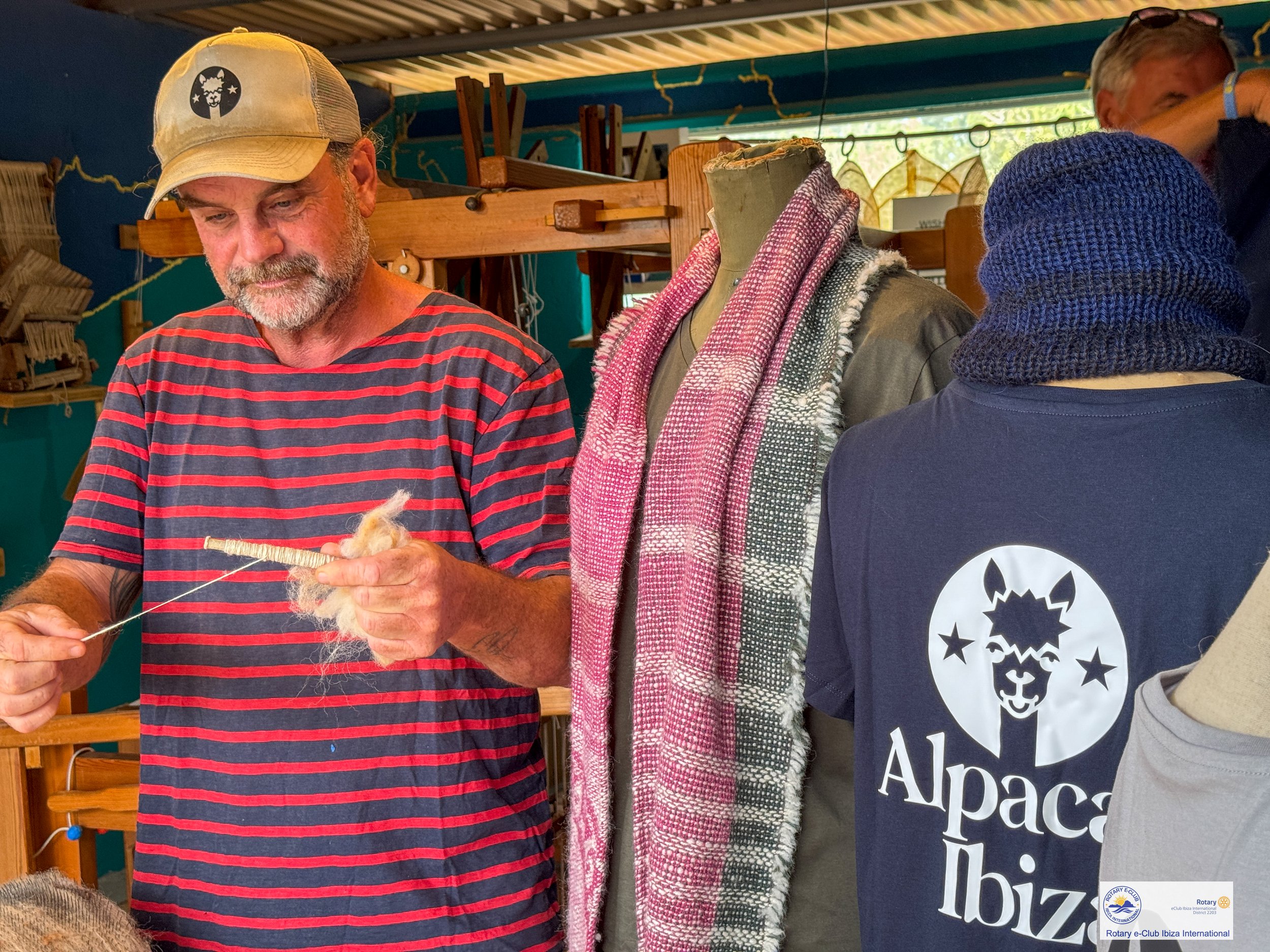
The weaving room
Before meeting the alpacas, we saw the other side of the project: Wishfulfilling Weaving, San's studio, where alpaca fleece becomes handwoven cloth.
Inside were raw fleece, threads, finished pieces and a large traditional loom.
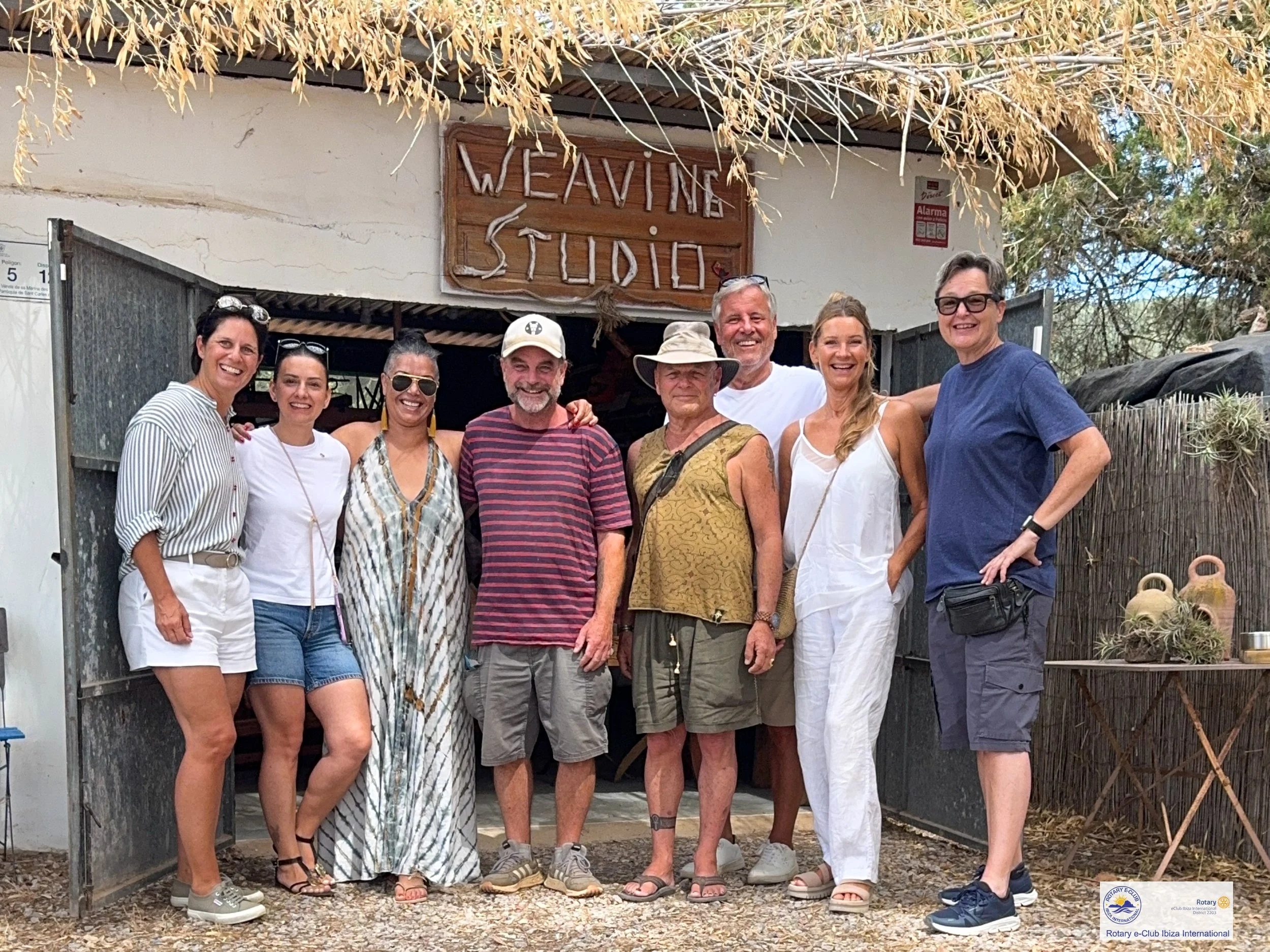
The wool itself was extraordinarily soft. Bart talked about fibre quality, microns and the prize of King Lewis's celebrated fleece (More on this alpaca, in a moment). You didn't need to follow every detail; the difference was obvious in the hand.
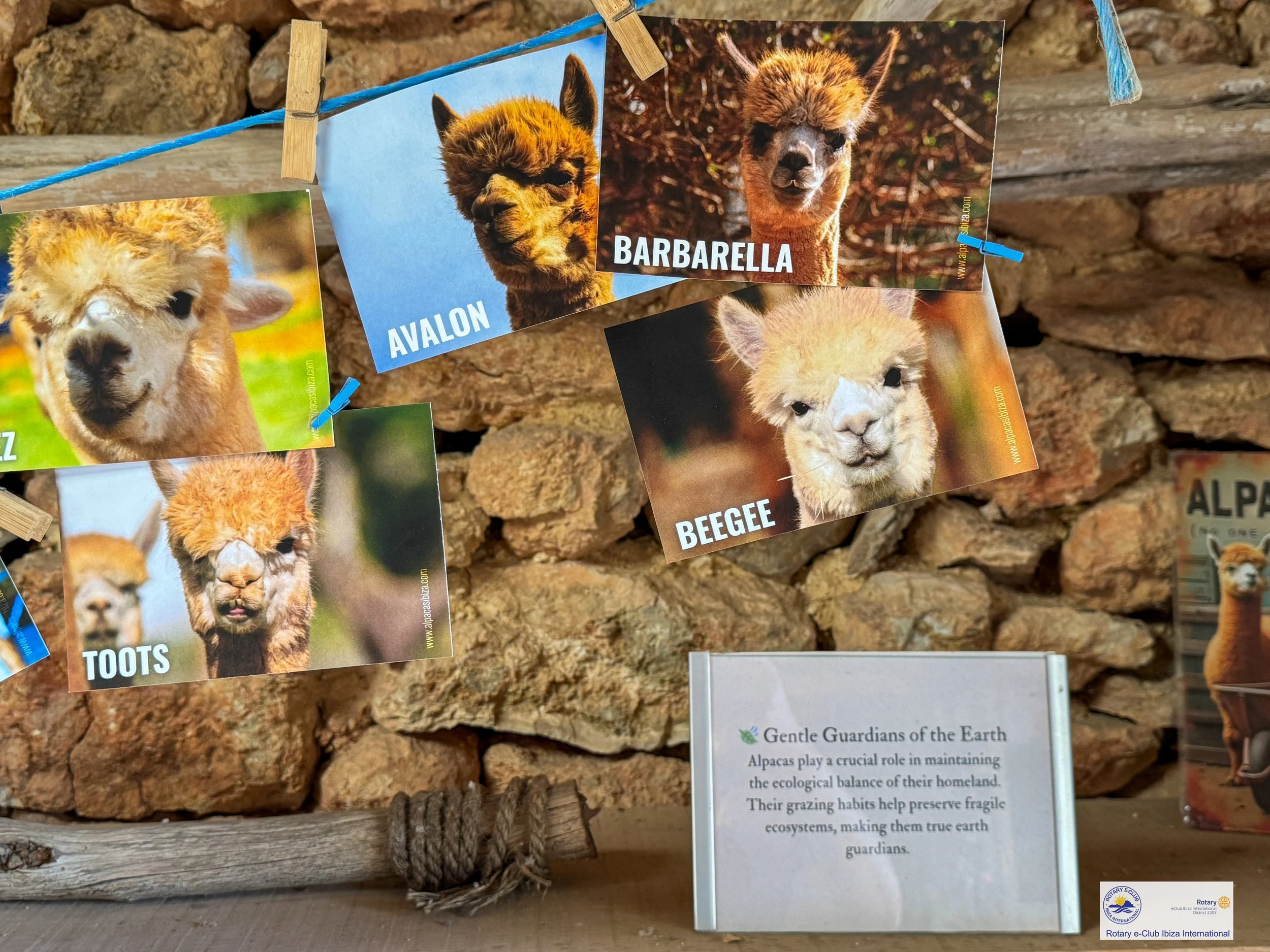
There were scarves, purses, keyrings and other woven pieces for sale, and a few members bought some. At the end of our visit I was given a postcard of BeeGee the alpaca (You get to choose, and I have a poignant love of “For Whom The Bell Tolls”... Don’t judge!)
Meeting the alpacas
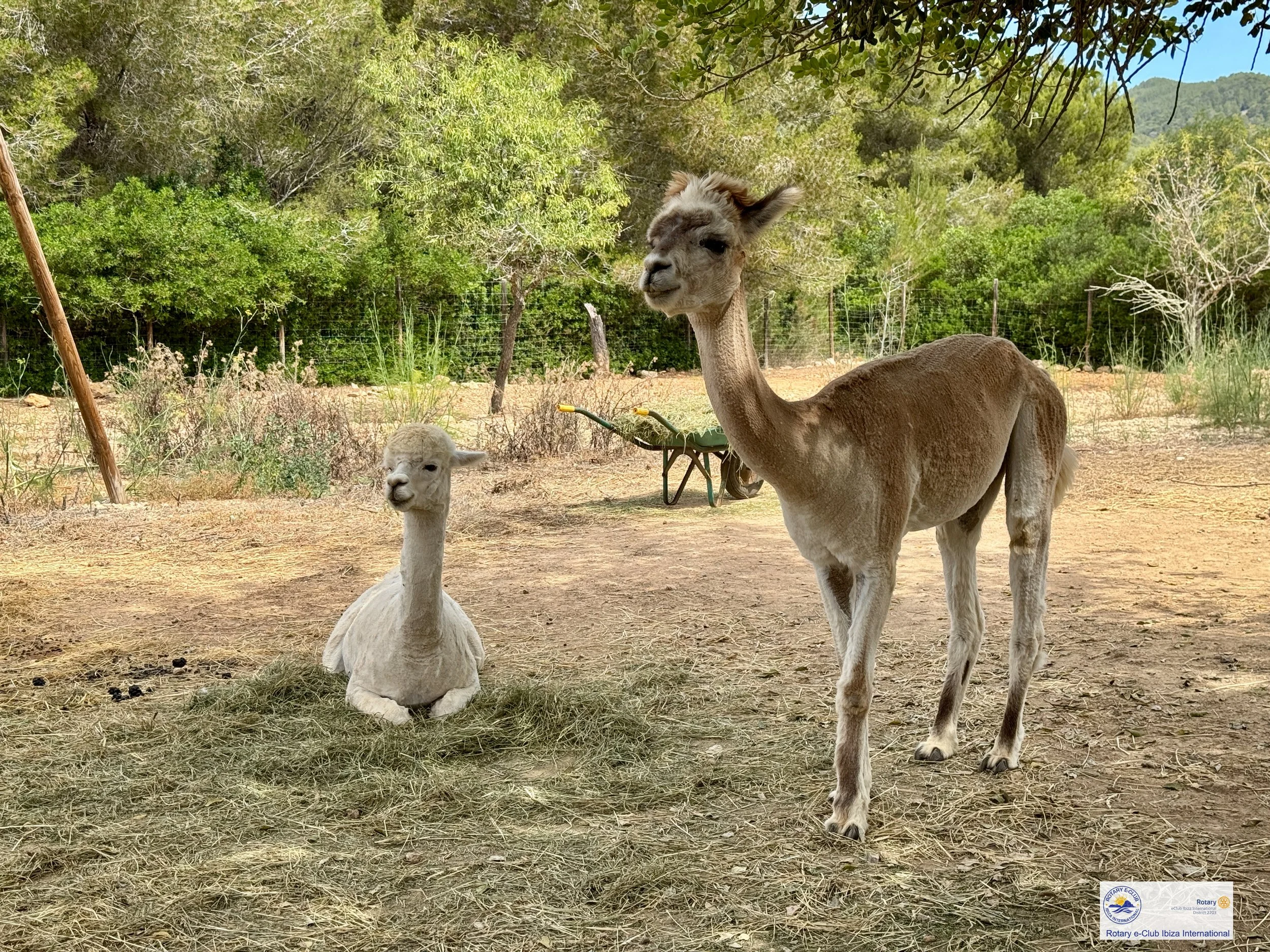
Bart started with the practicalities. The males and females are kept separately, with young males in their own area and King Lewis, the senior stud alpaca, accompanied by Mojo. Alpacas should not be kept alone, so companionship is taken very seriously.
King Lewis watched us with the air of someone who has seen visitors before and is not especially impressed. He grew more animated only when we moved towards the females, at which point his interest in proceedings picked up noticeably.
Before we entered the female paddock, Bart went in ahead to guide the alpacas away from the gate, and warned us not to stand directly behind them, since they can kick if startled.
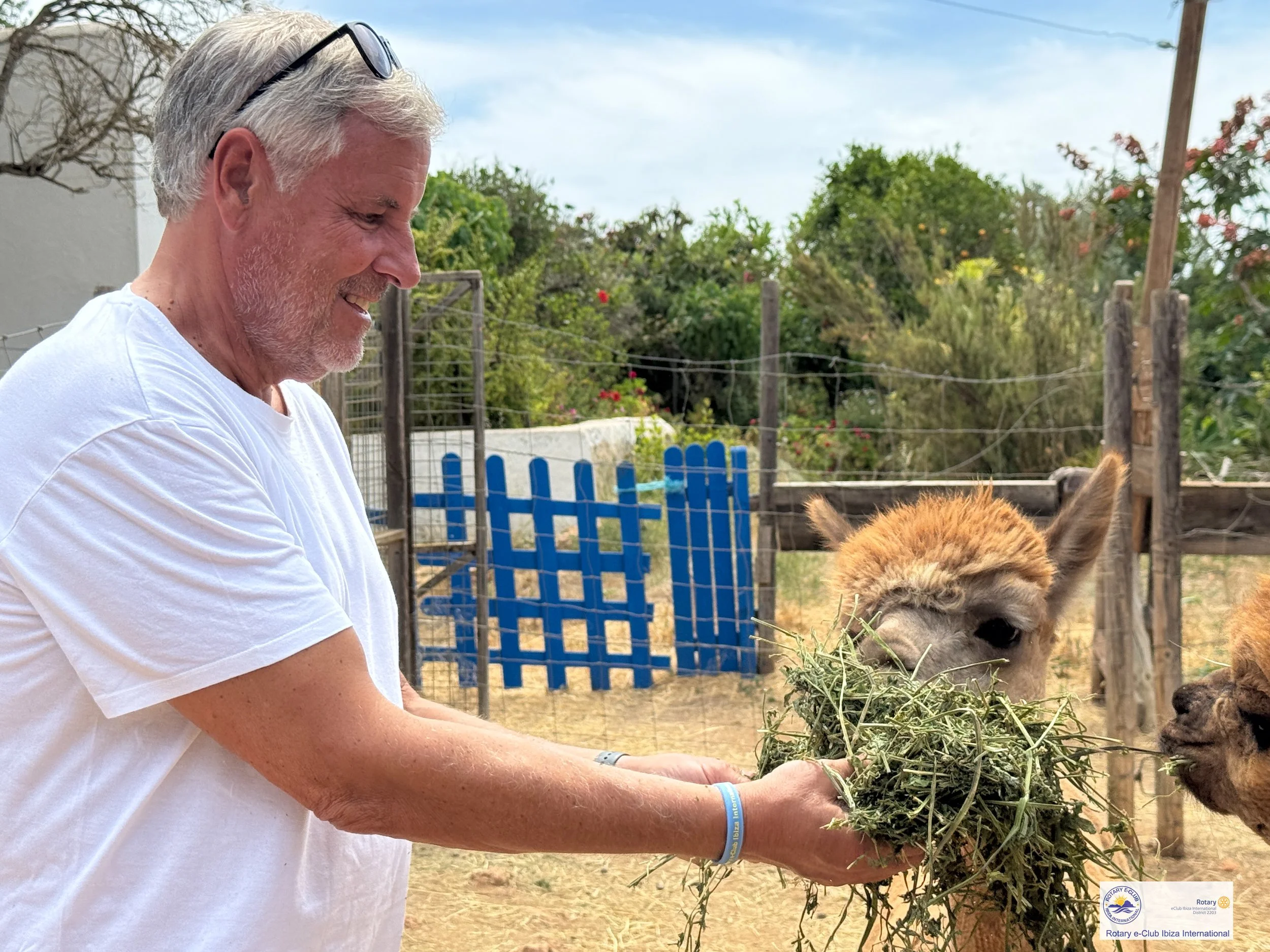
Then came the alfalfa.
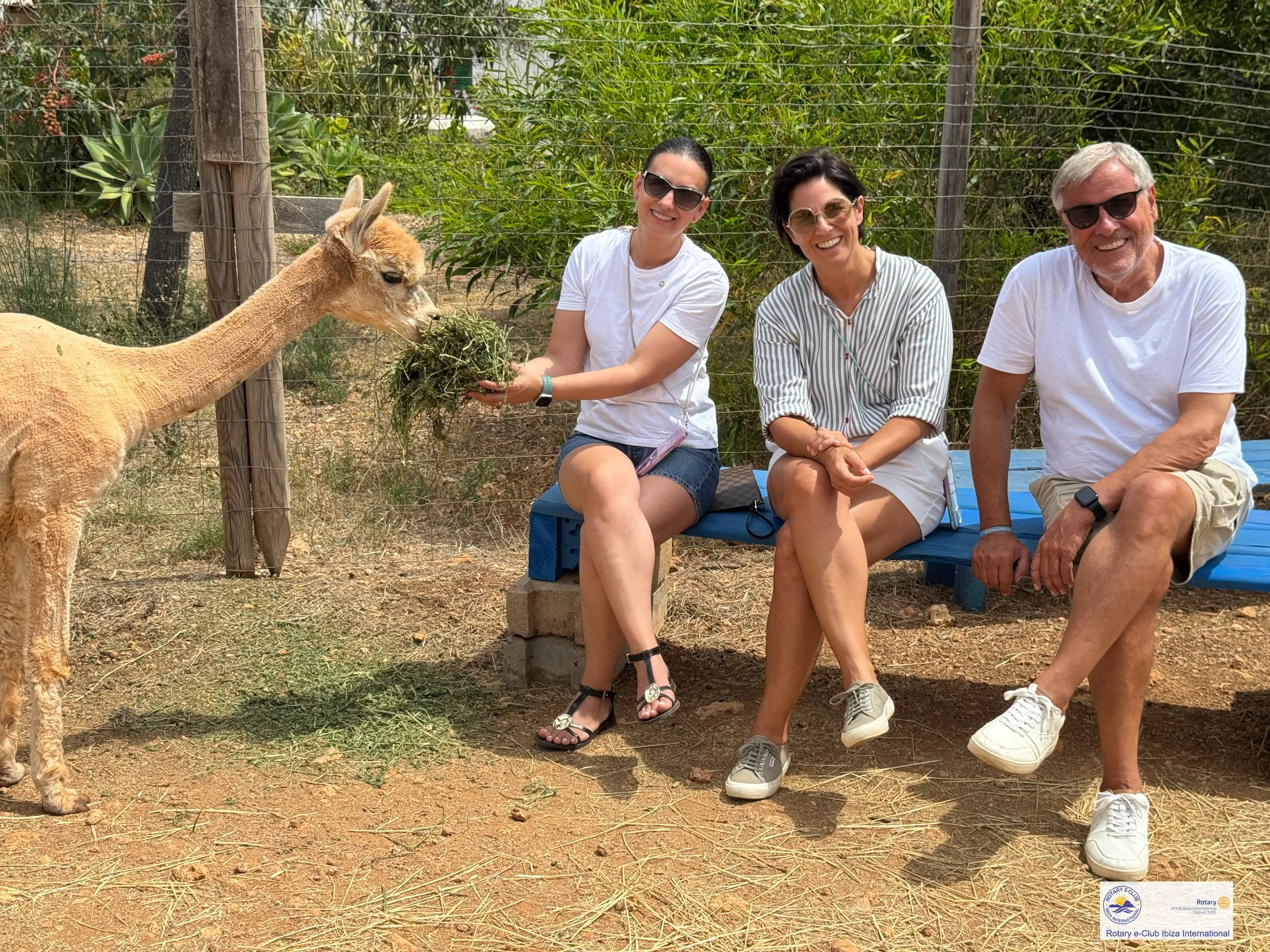
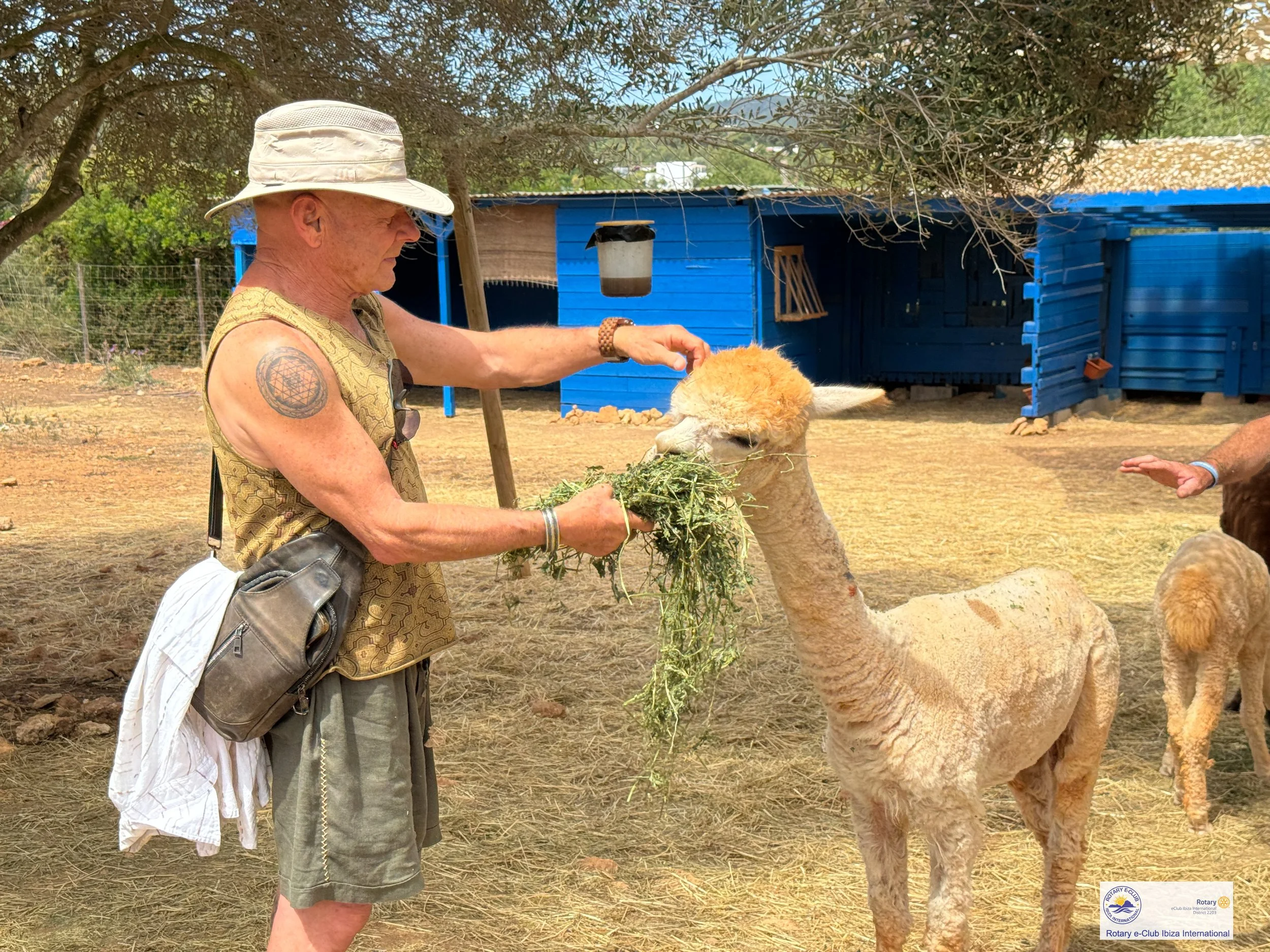
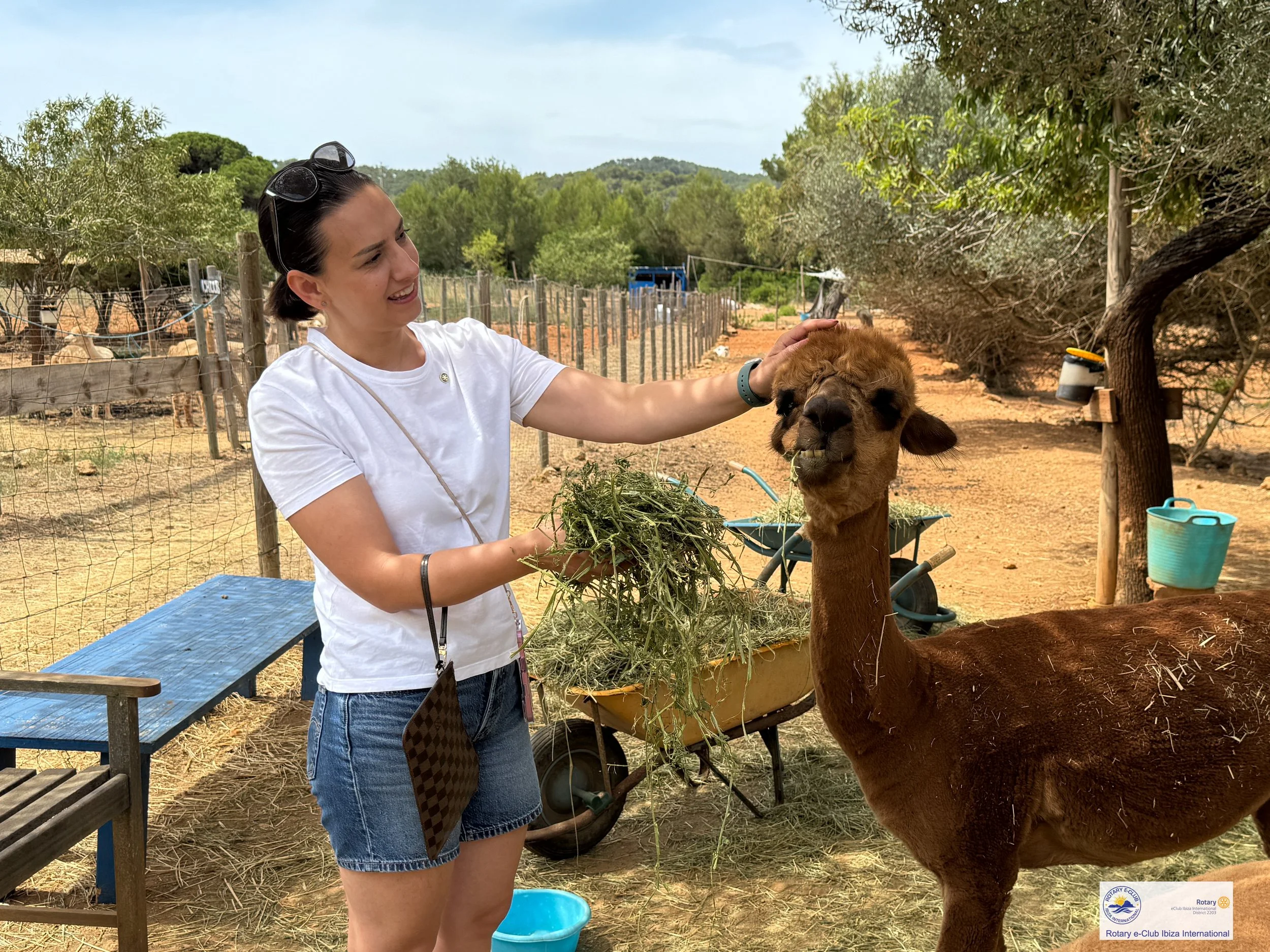
There are worse ways to spend a Sunday morning than standing in a paddock in north Ibiza, holding out handfuls of feed to recently sheared alpacas while trying not to look too delighted with yourself. Some of us were cautious at first, though not for long.
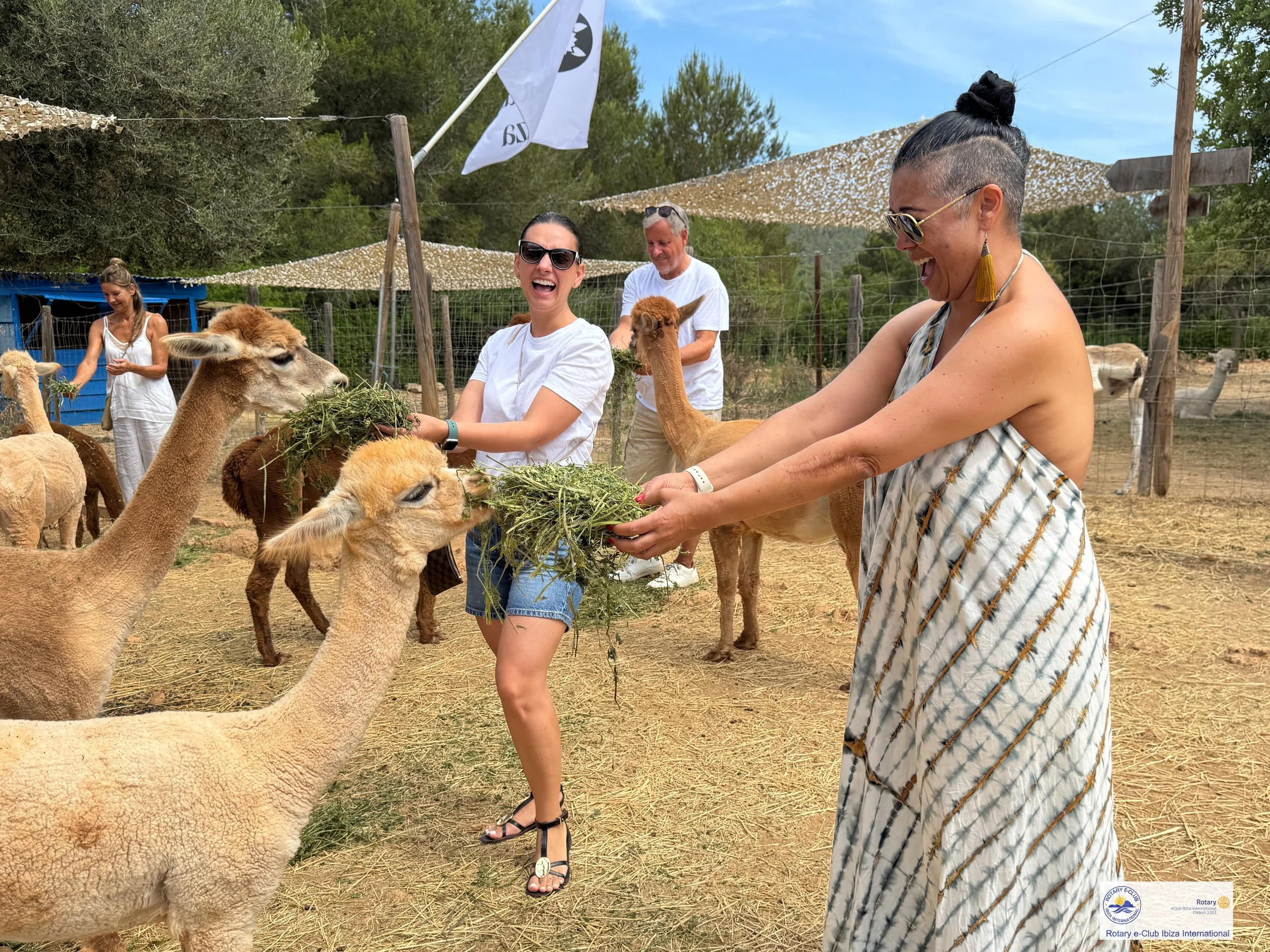
The alpacas were curious and far more delicate in their movements than I think we had expected. They occasionally hummed softly, with the odd chirruping note passing between them too. The babies were all long legs and soft presence.
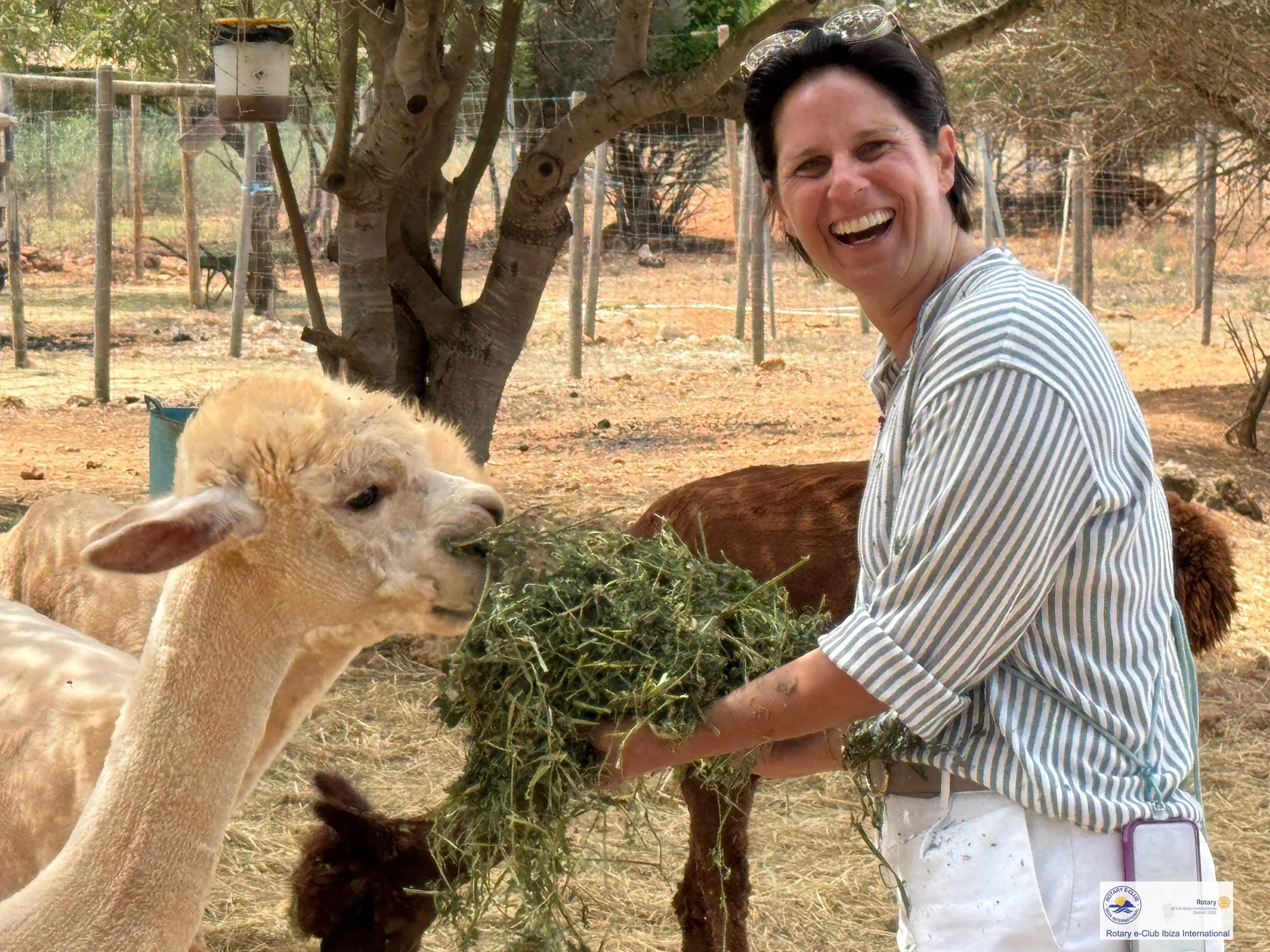
Bart explained that alpaca babies are born already fleeced, usually six to seven kilos, roughly the size of a small dog but with far longer legs. Their early growth is watched closely, since steady weight gain is the sign all is well.
He talked too about the different needs of mothers, babies, young males and adult animals. Young males need careful management as they mature, which is one reason the herd is separated. In summer, the alpacas may be hosed down up to seven times a day to keep cool.
Bart also imports the feed himself, since the quality he wants for their health isn't currently available locally.
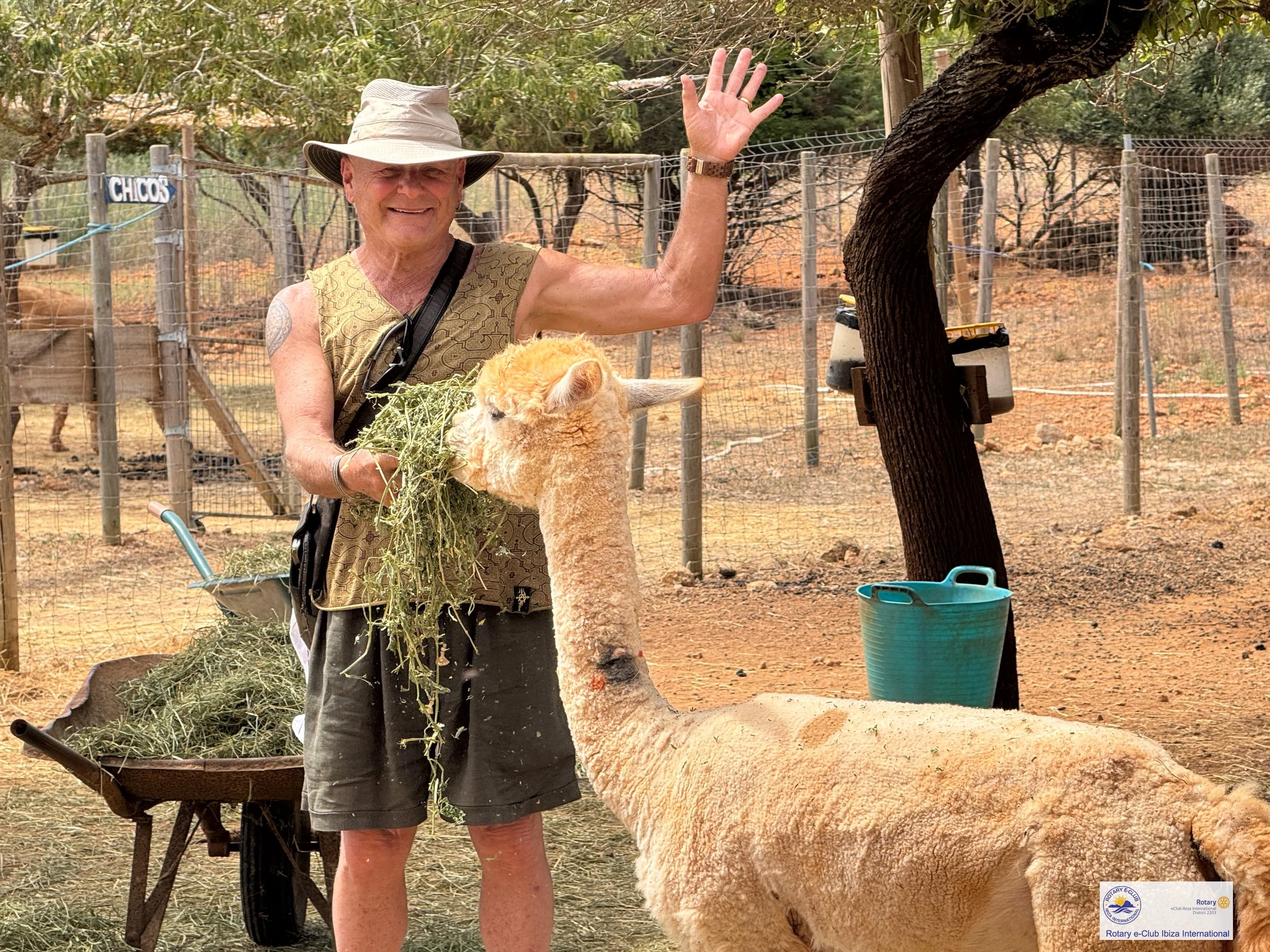
BeeGee, Dusty and the naming system
Bart spent part of his journalism career in the music world, and it shows up in the herd. Many of the alpacas have musician-inspired names.
BeeGee was one of them, hence my postcard.
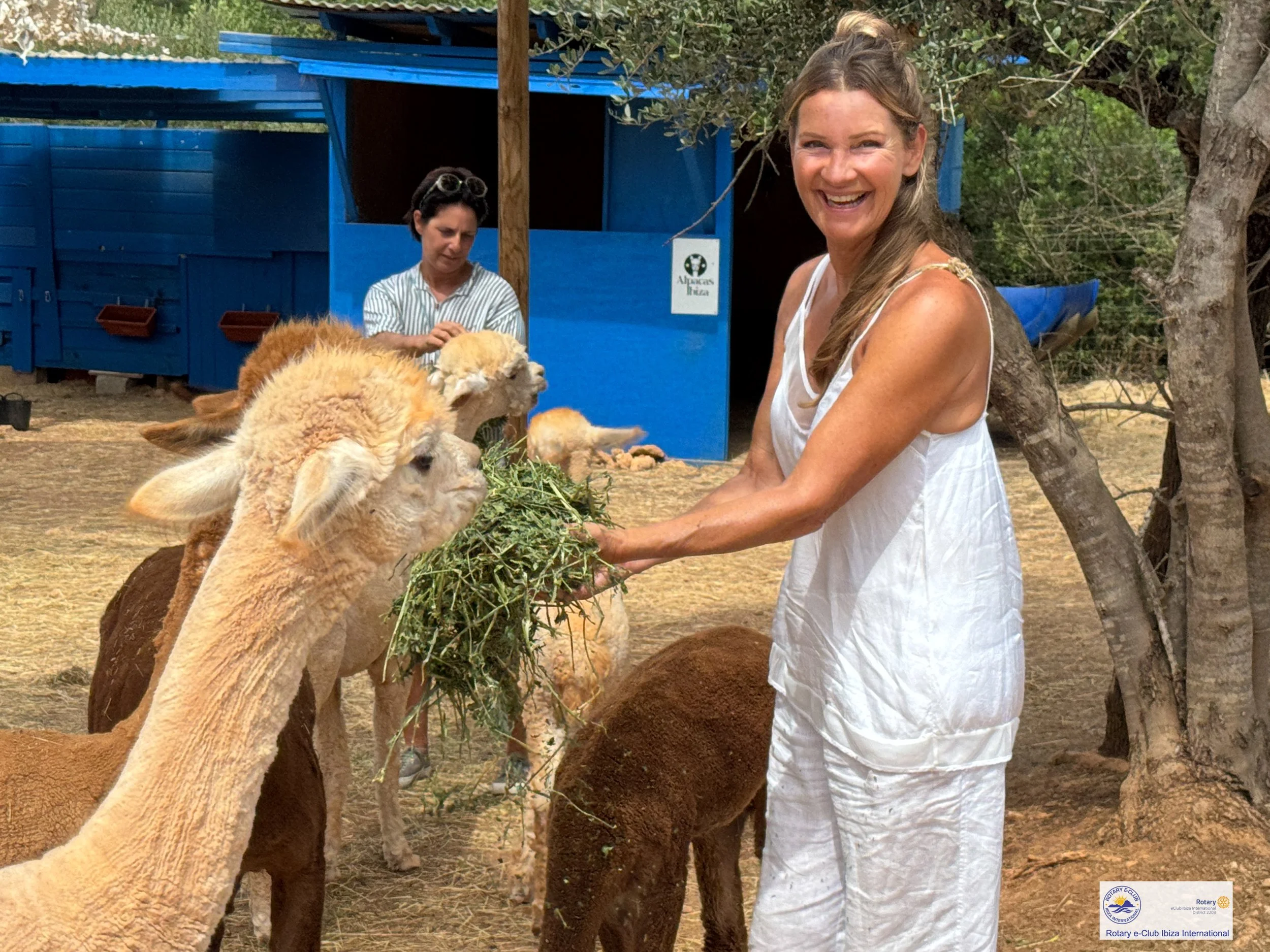
There was also Dusty, a female alpaca whose main principle in life seems to be independent decision-making. If the herd turns left, Dusty considers turning right. When the others hurry for shelter, she takes her time. Bart spoke about her with obvious fondness, and it was hard not to feel that every herd probably needs at least one member who treats group consensus as advisory…
The alpaca kiss
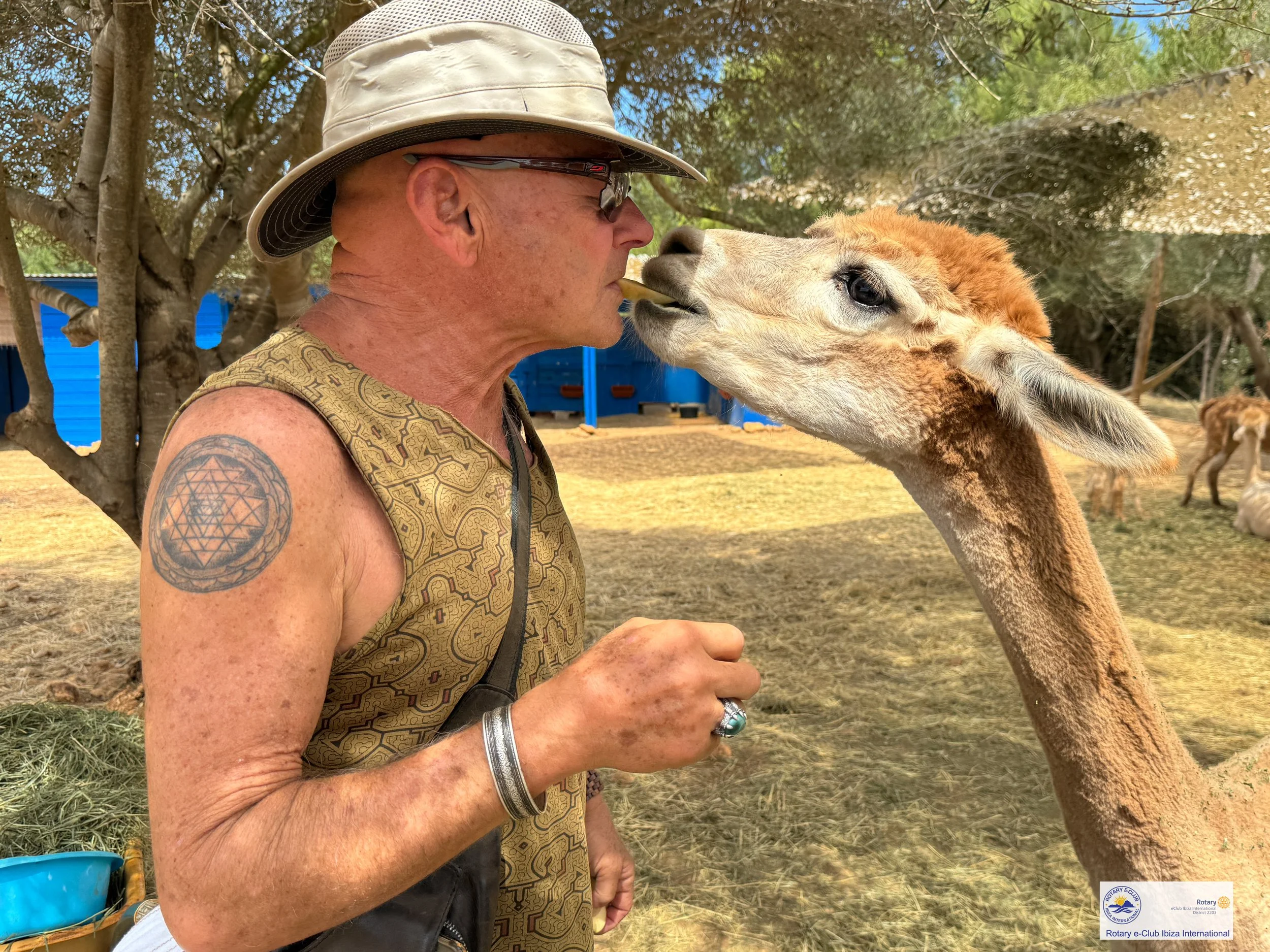
Before we left the female alpacas, Bart offered us apple slices to feed them….
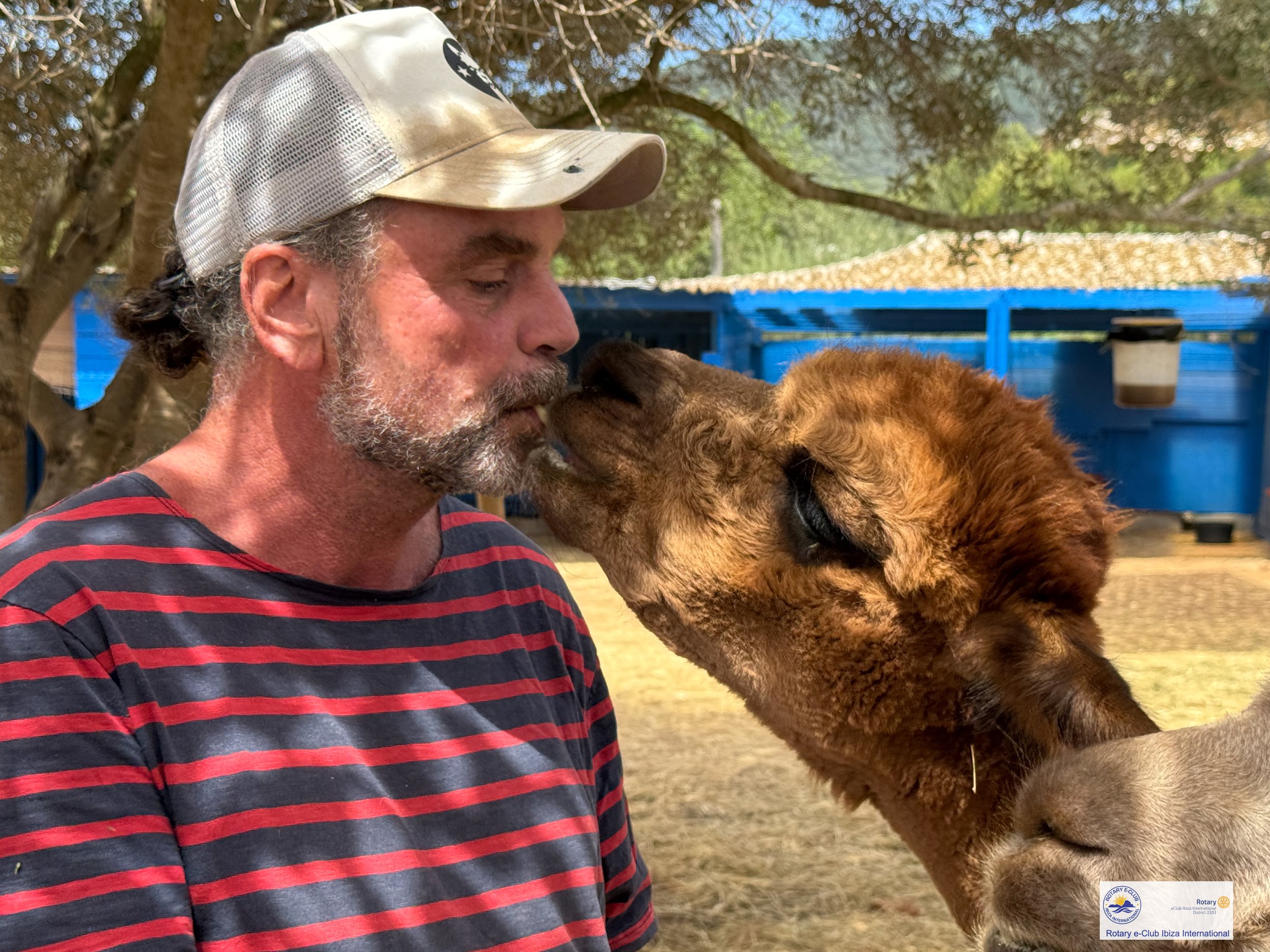
This came with a useful anatomical detail: alpacas have bottom teeth, but no top front teeth. So a person can hold an apple slice partly in their mouth and let an alpaca take it gently, producing what looks very much like an “alpaca kiss”.
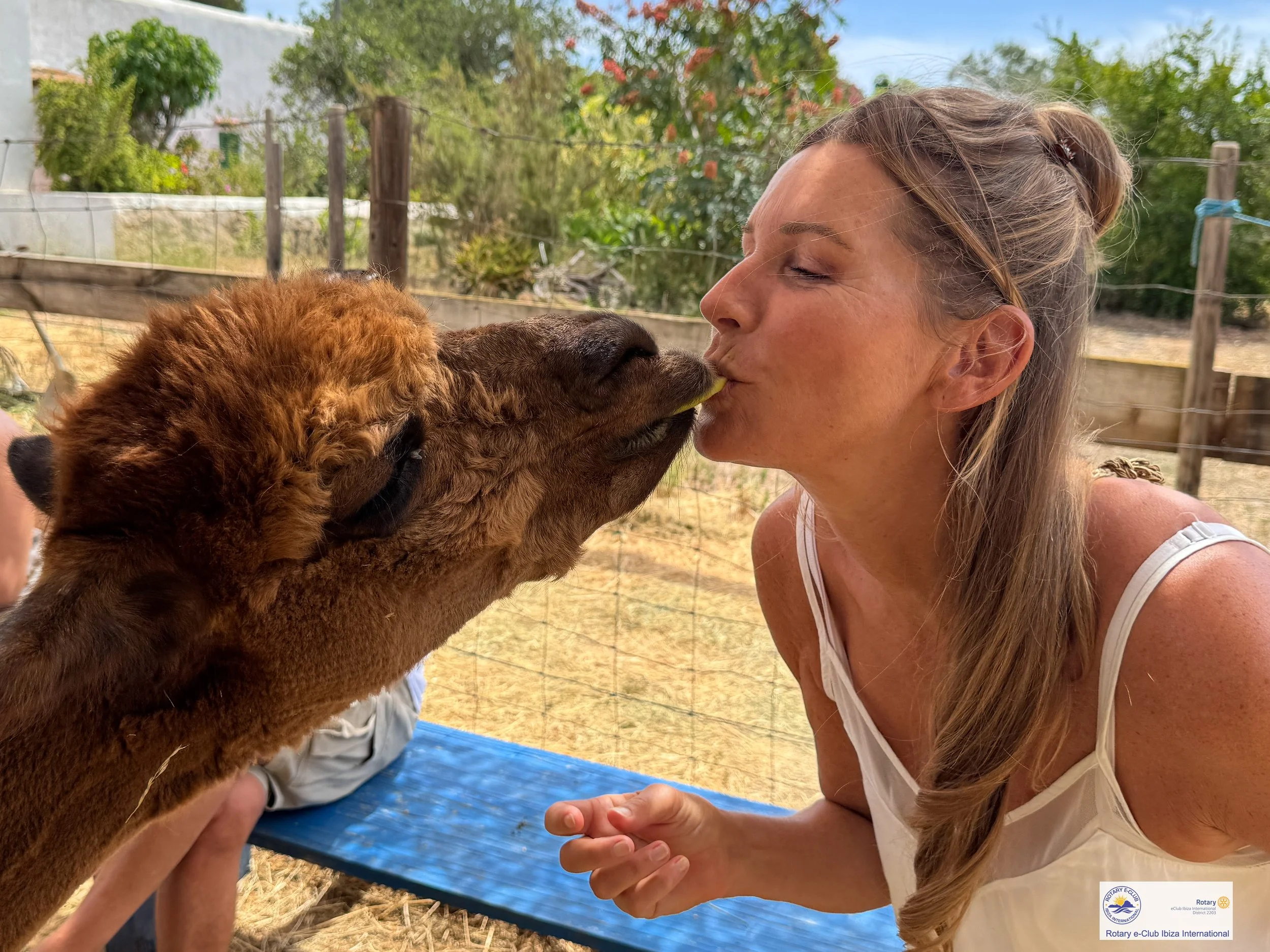
Several members gave it a try. Some were braver than others.
It was a small, daft, charming moment of interaction with the alpacas, and whatever caution we'd arrived with didn't survive it. Rotary meetings don't usually include alpaca kisses. Once in a while, it does no harm.
Alcaca, unexpectedly persuasive
Then there was Alcaca.
Alcaca is Bart's alpaca-manure fertiliser…
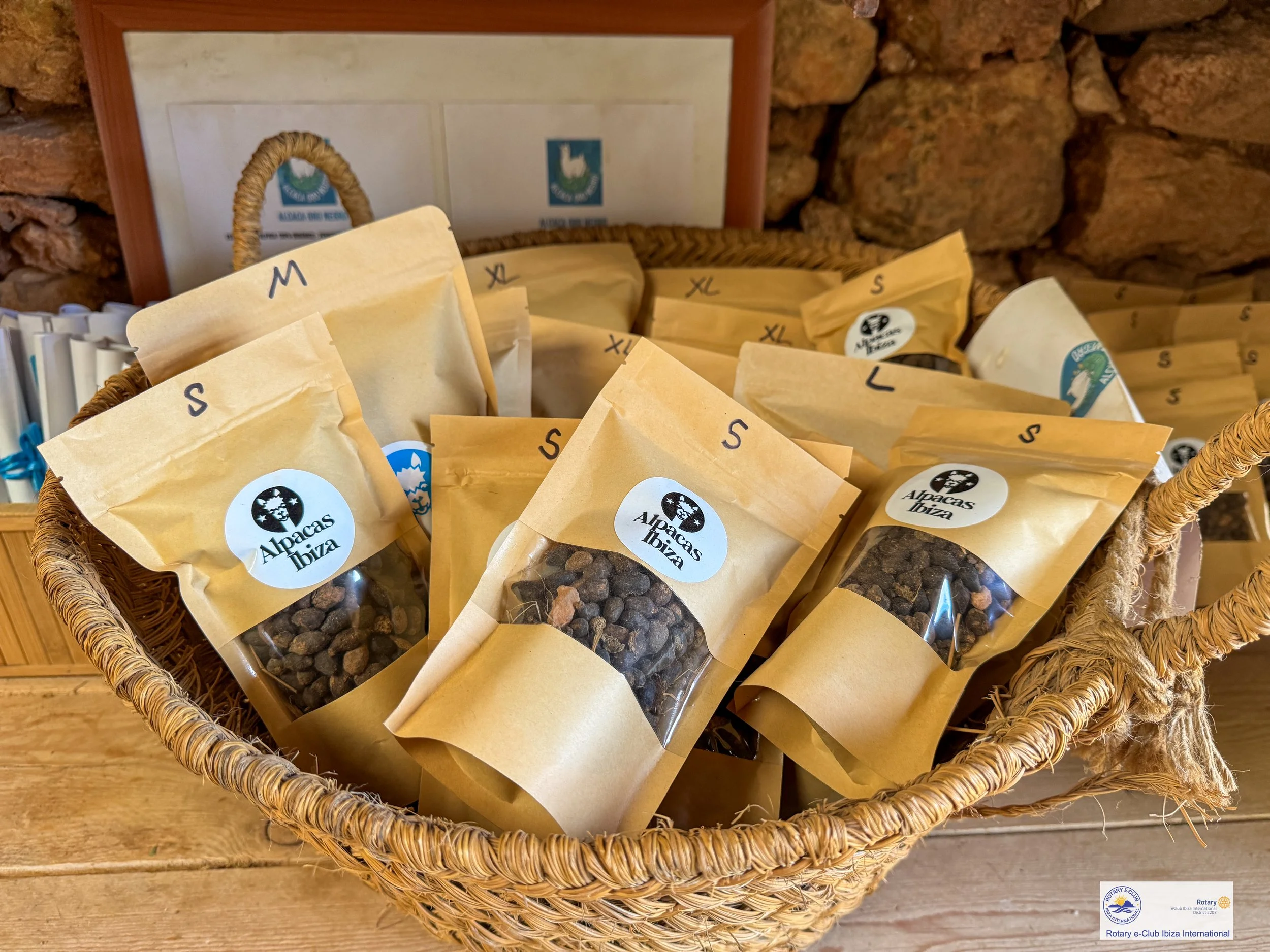
Bart explained that alpaca manure can be used in small quantities around plants, where it releases nutrients gradually. Small packets at the farm gave visitors an easy way to try it at home.
By the end of the visit, several members had bought packets of Alcaca. It may be the first club outing to end with members willingly investing in … poo.
Buying it was also, in a small way, support. A farm like this is lovely and the opposite of low-maintenance. The animals need attention every day; so do the paddocks, shelters, feed, fleece, weaving, the weather and the visitors.
What the visits are for
ReCII's work is often described through service, fundraising, community support and environmental action. Those are real parts of what the club does, but not all of it.
Visits like this help us understand Ibiza a little better. The island is full of people building careful, unusual projects most of us would never otherwise come across. Someone joins a Monday meeting, a question gets asked, and sometimes a visit follows. We end up knowing a bit more about the place we live and the people getting on with things in it.
Es Currals gave us exactly that: a glimpse into a corner of the island we might otherwise have missed. We came curious and left more taken with the place than we'd expected, with a far better sense of the work behind those beautiful humming animals.
Our thanks to Bart for the welcome, for sharing what he knows so generously, and for letting us meet the alpacas that are so obviously family, and individuals unto their own right.
Visits to Es Currals Alpacas Ibiza are by appointment only.
You can find out more about visiting the farm, alpaca sponsorship and the farm shop on Bart and San's website.
A note on this piece:
I write for and on behalf of ReCII, so the "we" throughout is the club's.
But I'll add one thing in my own right:
the next time my nieces visit, currently twelve and fifteen, I'll be booking an appointment to take them to meet the alpacas.
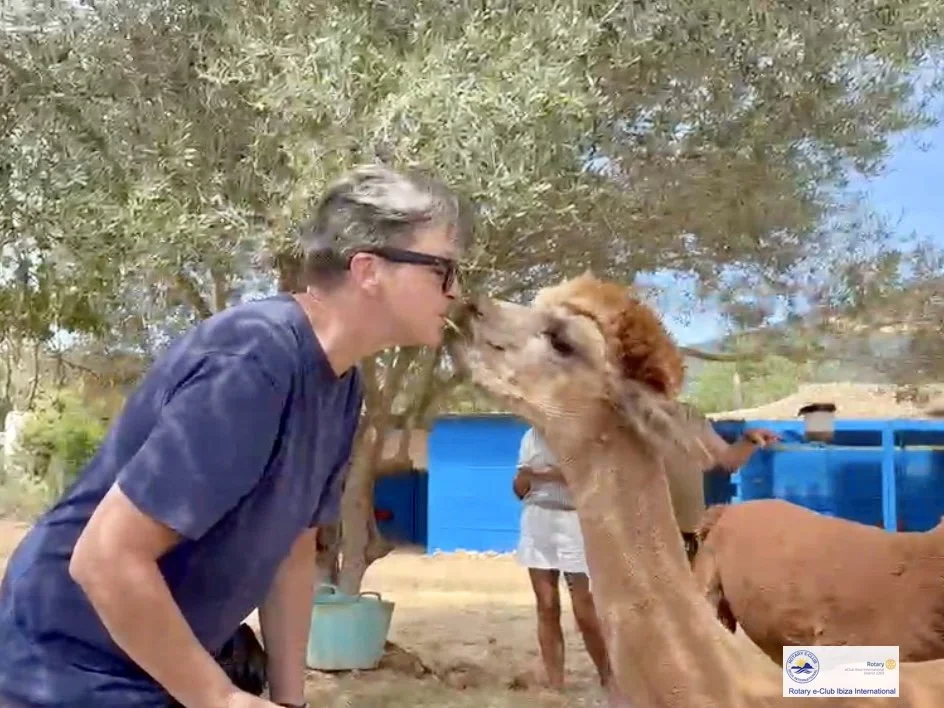
Image copyrights: © Cat Milton, and Ramona Balota